
Email
 Jiangyin Triblues Technology Co., LTD.
Select Language
English


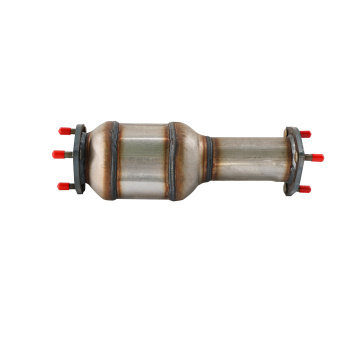

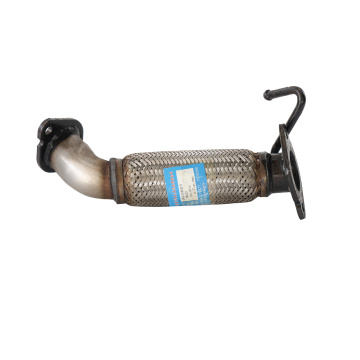


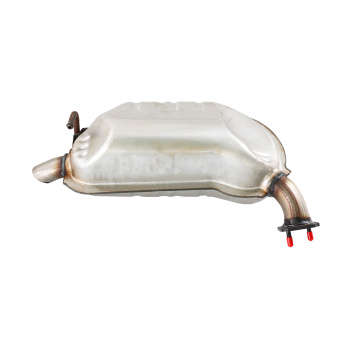
A universal catalytic converter is an emission control device designed to fit a wide variety of vehicle makes and models. Unlike direct-fit converters that are engineered for specific applications, universal units offer flexibility for custom exhaust systems, classic car restorations, and aftermarket modifications.
These converters use precious metals like platinum, palladium, and rhodium to convert harmful pollutants into less toxic substances before they exit the tailpipe. The ceramic honeycomb structure provides maximum surface area for chemical reactions while maintaining backpressure within acceptable limits for engine performance.
Purchasing universal catalytic converters offers significant cost savings and installation flexibility compared to OEM-specific units, making them ideal for mechanics working on diverse vehicle fleets or custom fabrication projects.

Direct-fit converters are manufactured to match exact OEM specifications for specific vehicles. They bolt directly onto existing hangers without cutting or welding. However, they only work with their designated application, limiting inventory flexibility for distributors.
Universal catalytic converters accommodate multiple engine sizes and configurations through adjustable inlet/outlet pipes and interchangeable mounting hardware. This versatility reduces SKU counts for suppliers and simplifies procurement for workshops serving diverse customer bases.

Jiangyin Triblues Technology Co., LTD. specializes in producing high-performance catalytic converters and diesel particulate filters backed by research partnerships with leading Chinese universities including Zhejiang University and Xi'an Jiaotong University. Our commitment to quality and innovation ensures reliable products for global distributors.
Sourcing from our facility gives you access to university-backed R&D technology, state-of-the-art manufacturing processes, and proven relationships with major automotive manufacturers — all at competitive wholesale pricing.
Collaboration with nine 985 universities ensures our converters incorporate cutting-edge catalyst formulations and thermal management technologies.
Business cooperation with Shenyang Jinbei Automobile, CSIC, and Haier Group demonstrates our ability to meet stringent industrial standards.
From ceramic carriers to complete three-way converters and diesel particulate filters, we supply comprehensive emissions solutions under one roof.
Our manufacturing facility implements rigorous quality controls throughout the production process. Every universal catalytic converter undergoes testing for light-off temperature, conversion efficiency, pressure drop, and thermal durability before shipment.
We manufacture and source premium ceramic honeycomb substrates with precise cell densities ranging from 200 to 1200 CPI. Our carriers feature uniform wall thickness, consistent channel geometry, and excellent thermal shock resistance to prevent cracking during installation and operation.
Each converter receives optimized washcoat formulations containing platinum, palladium, and rhodium at levels calibrated for specific emission standards. We balance performance requirements with material costs to deliver converters that meet regulatory compliance while protecting your margins.
Stainless steel housings are precision-formed and TIG-welded to ensure leak-free construction. Our quality inspections include pressure testing and visual examination of all weld seams to guarantee structural integrity under vibration and thermal cycling conditions.
Batch sampling includes dynamometer testing to verify conversion efficiency meets or exceeds EPA Tier 2 and Euro 6 standards. Test reports are available upon request, giving your procurement team documented proof of product performance.
Selecting the correct universal catalytic converter requires matching several technical parameters to your target vehicle applications. Wrong selections lead to failed inspections, customer complaints, and costly returns. Use this guide to specify converters accurately.
The converter volume must correspond to total engine displacement. A 2.0L four-cylinder engine typically requires 60-100 cubic inch converters, while V6 engines need 100-160 cubic inches. Mismatched sizing causes insufficient conversion or excessive backpressure that reduces power output.
Identify whether your market requires EPA CARB EXEMPT, EPA TLEV, EPA ULEV, or California SULEV compliance. Each standard specifies different precious metal loading minimums and certification requirements. Our converters are available across multiple emission tiers.
Gasoline engines require three-way catalysts that simultaneously reduce NOx, oxidize CO, and oxidize hydrocarbons. Diesel applications need diesel oxidation catalysts or diesel particulate filters. Specifying the wrong type results in zero emission improvement.
Universal converters come with various pipe diameters (1.5", 2", 2.25", 2.5", 3") and angles. Measure the distance between existing hanger flanges and note pipe orientation before ordering. Our product catalog lists dimensions for every SKU so you can match precisely without trial-and-error ordering.
Use this checklist when evaluating potential suppliers and comparing universal catalytic converter offerings. Each item addresses a critical factor that impacts your total cost of ownership and customer satisfaction.
Confirm the supplier provides CARB EO numbers or EPA certificates for each converter model. Without proper documentation, your customers cannot legally install these parts in regulated states. Request current certificate copies before placing orders.
A supplier offering 100+ universal SKUs covering gasoline and diesel applications reduces your vendor management overhead. Consolidating purchases with one manufacturer who also supplies DPFs and ceramic carriers simplifies logistics and negotiation.
Reputable suppliers provide evaluation samples before bulk orders. Test converters on actual vehicles or test benches to verify fitment, light-off time, and conversion rates. Never commit to large quantities without first validating performance in your operating environment.
Establish clear warranty terms covering premature failure, cracking, or conversion efficiency degradation below specified thresholds. Suppliers with established defect response protocols minimize your exposure to warranty claims from end customers.
Evaluate minimum order quantities against your storage capacity and cash flow. Suppliers offering tiered MOQs allow you to start small and scale as demand grows. Lower initial commitments reduce risk while building confidence in the partnership.
Professional CAD drawings, dimension sheets, and application matrices demonstrate engineering capability. Suppliers who invest in accurate documentation save you time during product listing creation and technical support interactions with your customers.
When evaluating potential suppliers for universal catalytic converters, prioritize manufacturers with demonstrated capabilities across the entire value chain — from substrate sourcing to final assembly and testing. Here are key recommendations for building a reliable supply base.
Manufacturers who produce both ceramic carriers and complete converters maintain tighter quality control and faster turnaround times. Vertical integration eliminates coordination delays between separate suppliers and provides single-point accountability for product defects.
Assess annual production volumes and peak capacity utilization before committing to contracts. Suppliers with excess capacity can accommodate rush orders and seasonal demand spikes without compromising delivery schedules or quality standards.
Suppliers investing in research partnerships and continuous improvement develop newer, more efficient converter designs over time. This ongoing innovation protects your business from obsolescence as emission regulations tighten globally.
International shipping experience indicates familiarity with export documentation, packaging standards, and customs procedures. Suppliers accustomed to global distribution reduce administrative burden and minimize shipping delays that disrupt your inventory planning.
We recommend requesting samples from three shortlisted suppliers, testing them against identical performance criteria, and conducting factory audits for your top two choices. This systematic approach minimizes selection risk and identifies the partner best suited to your volume requirements and quality expectations.
Procurement teams frequently encounter challenges when sourcing universal catalytic converters internationally. Understanding these common problems in advance enables you to implement preventive measures and protect your supply chain from disruption.
Universal converters labeled as "one size fits all" often require extensive modification. Verify pipe diameters, hanger positions, and overall length compatibility before bulk ordering. Dimension mismatches account for approximately 40% of return reasons in this category.
Some low-cost converters use inadequate precious metal loading that fails to meet emission standards. Always request third-party test reports rather than relying on supplier claims. Converters performing below specification create liability exposure for installers and retailers.
Substandard stainless steel housings corrode prematurely after exposure to road salt and moisture. Specify 304 or 321 grade stainless steel for housing construction. Conduct salt spray testing on samples to verify corrosion resistance before approving production runs.
Some suppliers provide fake or expired CARB/EPA certification numbers. Verify all certificate numbers independently through official regulatory databases before accepting shipments. Using uncertified converters in regulated markets carries substantial fines.
Inadequate packaging leads to denting, scratching, and weld damage during ocean freight. Require suppliers to use reinforced cardboard boxes with internal dividers and moisture barriers. Document any transit damage immediately upon receipt with photographic evidence.
Language differences and time zone gaps complicate technical discussions about specifications and problem resolution. Establish written communication protocols with standardized terminology and confirm understanding through detailed purchase order documentation.
Direct-fit converters are engineered for specific vehicle applications with exact bolt patterns and hanger locations. Universal converters offer flexible pipe configurations that can be cut and welded to fit various exhaust systems. Direct-fit units provide faster installation but require precise application matching, while universal units offer broader compatibility at the cost of additional fabrication time.
Only universal converters with valid CARB Executive Order (EO) numbers or EPA certifications will pass inspection in regulated states like California. Always verify the specific EO number matches your vehicle's year, make, model, and engine displacement. Installing non-certified universal converters in regulated jurisdictions violates federal and state emissions laws.
Quality universal catalytic converters typically last 10 years or 100,000 miles under normal driving conditions. Factors affecting lifespan include engine tuning, oil consumption rates, fuel quality, and driving habits. Converters exposed to excessive heat from engine misfires or rich fuel mixtures may degrade prematurely.
Installation requires cutting the existing exhaust system and welding new joints, which demands specialized tools and welding skills. While experienced DIY mechanics can perform this work, professional installation by certified exhaust shops is recommended to ensure proper fitment, leak-free welds, and compliance with local emissions regulations.
Three-way catalysts use platinum and palladium for oxidation reactions and rhodium for nitrogen oxide reduction. Platinum group metal content varies by emission standard and application. Higher-loading converters achieve better conversion efficiency but carry higher material costs. Our converters optimize metal loading to balance performance and price.
Standard universal catalytic converter orders typically ship within 15-25 business days depending on quantity and customization requirements. Stock items may ship faster. Custom configurations requiring special coatings or metal loadings may extend lead times to 30-45 days. Contact us for current availability on specific SKUs.
Diesel particulate filters (DPFs) and diesel oxidation catalysts (DOCs) are distinct products that serve different functions. DOCs oxidize carbon monoxide and hydrocarbons, while DPFs capture and burn soot particles. Both use catalytic coatings but have different internal structures. We supply both product categories for comprehensive diesel emissions coverage.
Request factory photos, production videos, and third-party audit reports. Visit the facility if possible. Ask about equipment capabilities, quality control procedures, and employee training programs. Suppliers with transparent operations and verifiable credentials typically maintain higher quality standards and more reliable delivery performance.
Our company has been committed to the production, research and development of industrial waste gas treatment equipment,We have research and development cooperation with Zhejiang University, Xi 'an... Subscribe Our Newsletter
Related Products List

Privacy statement: Your privacy is very important to Us. Our company promises not to disclose your personal information to any external company with out your explicit permission.
Fill in more information so that we can get in touch with you faster
Privacy statement: Your privacy is very important to Us. Our company promises not to disclose your personal information to any external company with out your explicit permission.