
Email
 Jiangyin Triblues Technology Co., LTD.
Select Language
English


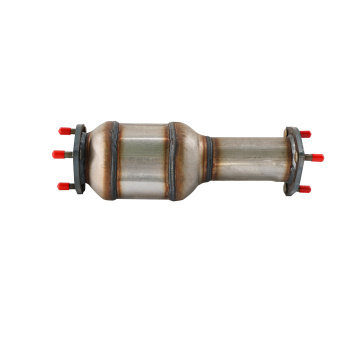

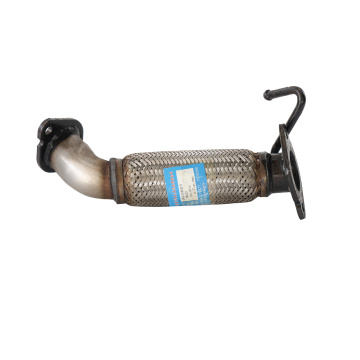


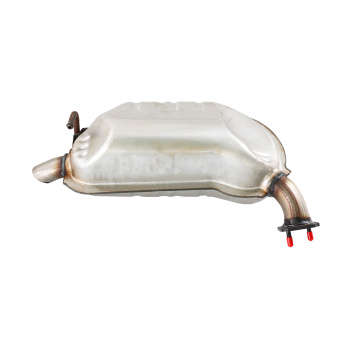
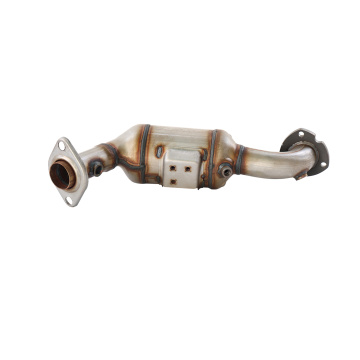
A direct-fit three-way catalytic converter is an emissions control device designed to replace the original equipment manufacturer (OEM) part on specific vehicle models without requiring custom fabrication or welding. It serves as a drop-in solution for drivers and fleet managers seeking to restore compliance with environmental regulations while maintaining engine performance.
Modern gasoline engines produce three primary pollutants: Carbon Monoxide (CO), Hydrocarbons (HC), and Nitrogen Oxides (NOx). A three-way catalyst simultaneously converts these harmful gases into harmless Carbon Dioxide (CO₂), Water Vapor (H₂O), and Nitrogen (N₂).
Universal converters require cutting pipes and custom welding, which introduces risks of exhaust leaks and installation errors. Direct-fit units match the exact dimensions, flange patterns, and sensor locations of the original part, ensuring a secure seal and faster installation time.
At Jiangyin Triblues Technology Co., LTD., we understand that emission components are critical for both regulatory compliance and vehicle longevity. Our manufacturing process leverages advanced ceramic carrier technology and rigorous quality assurance protocols to ensure every unit meets OEM standards.
We utilize high-density ceramic honeycomb structures provided by our R&D partnerships. These carriers offer superior thermal stability and surface area, maximizing the contact between exhaust gases and precious metals for optimal conversion efficiency.
Our direct-fit converters are engineered using precise CAD data from vehicle manufacturers. This ensures that bolt holes, flanges, and oxygen sensor bungs align perfectly, eliminating the need for modification during installation.
Every batch undergoes rigorous thermal cycling and vibration testing. We verify that the internal substrate remains intact under extreme heat and road stress, preventing premature failure and ensuring a long service life.
When evaluating suppliers for direct-fit three-way catalytic converters, procurement teams must look beyond price. The following checklist helps you assess technical capability, supply chain reliability, and product compliance.
Selecting the correct catalytic converter requires matching specific technical parameters to the end-vehicle application. A mismatch can lead to check-engine lights, failed inspections, or reduced fuel economy.
| Parameter | Importance | Selection Criteria |
|---|---|---|
| Flow Rate | Critical | The converter must handle the engine's exhaust volume. Undersized units create backpressure, reducing horsepower; oversized units may not reach operating temperature quickly enough. |
| Light-off Temperature | High | Look for converters with low light-off technology. These begin converting pollutants at lower exhaust temperatures, improving cold-start emissions and meeting strict Euro 6 or Tier 3 standards. |
| Material Compatibility | High | Ensure the housing metal matches the expansion rate of the original pipe to prevent cracking during thermal cycles. Stainless steel housings are preferred for durability. |
| Oxygen Sensor Bung | Medium | Verify the location and thread size of O2 sensor ports. Incorrect placement can confuse the ECU, causing the engine to run rich or lean. |
Procurement failures often stem from choosing low-quality aftermarket parts. Below are the most frequent issues encountered in the field and how to avoid them.
The Issue: Low-quality substrates have weak bonding agents that shed particles, clogging the exhaust flow within months.
The Solution: Source from manufacturers like Triblues who use high-strength ceramic bonding and validate flow dynamics through CFD simulation.
The Issue: "Direct-fit" claims that are actually generic. This leads to gaps between flanges, causing exhaust leaks and noise.
The Solution: Request physical samples before bulk ordering to verify flange alignment and bolt-hole spacing against the OEM reference.
The Issue: Incorrect precious metal loading causes inefficient conversion, triggering OBD-II codes (P0420/P0430).
The Solution: Ensure the supplier provides lab test reports confirming conversion efficiency exceeds 98% for CO, HC, and NOx.
The Issue: Thin-gauge stainless steel housels rust out due to road salt and condensation.
The Solution: Specify Grade 304 or 321 stainless steel housings for corrosion resistance in harsh climates.
While primarily associated with passenger vehicles, direct-fit three-way catalytic technology extends to various sectors where emission compliance is mandatory.
The largest market segment. Covers sedans, SUVs, and light trucks requiring precise OE replacement for maintenance shops and DIY installers.
Delivery vans and light commercial vehicles. Fleet operators prioritize durability and quick turnaround times to minimize vehicle downtime.
Some newer off-road generators and machinery are subject to emission rules. Custom direct-fit solutions help comply with local environmental laws.
Choosing the right manufacturing partner is crucial for long-term success in the automotive aftermarket. We recommend looking for suppliers with strong R&D backing and established university collaborations.
R&D Strength: Unlike standard assemblers, we collaborate with top-tier institutions including Zhejiang University, Xi'an Jiaotong University, and East China University of Science and Technology. This gives us access to cutting-edge catalyst formulations.
Versatile Portfolio: Beyond three-way catalysts, we manufacture diesel particulate filters (DPF) and ceramic carriers, allowing you to consolidate your supply chain.
Proven Track Record: Our technology is trusted by major state-owned enterprises and automotive giants like Shenyang Jinbei Automobile and CSIC.
Customization: We offer tailored engineering support to develop specific PCC codes for your target vehicle applications, ensuring exclusive fitment solutions.
Common questions from procurement professionals regarding logistics, compatibility, and technical specifications.
Standard lead times usually range from 15 to 30 days depending on order volume and whether the SKU is held in stock. For custom configurations requiring new tooling or specific substrate sourcing, please allow 45-60 days.
Yes. For products intended for the US market, we provide necessary Executive Order (EO) numbers and compliance certificates to ensure your import clearance and retail sales are fully legal.
Absolutely. Depending on the target market's budget and emission standards (e.g., Euro 5 vs. Euro 6), we can adjust the concentration of Platinum, Palladium, and Rhodium to optimize cost-performance ratios.
Our MOQ varies by product type. For standard direct-fit units, we accommodate smaller trial orders to help you test the market. For custom packaging or private labeling, higher volumes may apply.
We utilize high-density ceramic substrates developed through our research cooperation with leading Chinese universities. These substrates are tested for crush strength, pressure drop, and thermal shock resistance before being coated.
Our company has been committed to the production, research and development of industrial waste gas treatment equipment,We have research and development cooperation with Zhejiang University, Xi 'an... Subscribe Our Newsletter
Related Products List

Privacy statement: Your privacy is very important to Us. Our company promises not to disclose your personal information to any external company with out your explicit permission.
Fill in more information so that we can get in touch with you faster
Privacy statement: Your privacy is very important to Us. Our company promises not to disclose your personal information to any external company with out your explicit permission.