
Email
 Jiangyin Triblues Technology Co., LTD.
Select Language
English


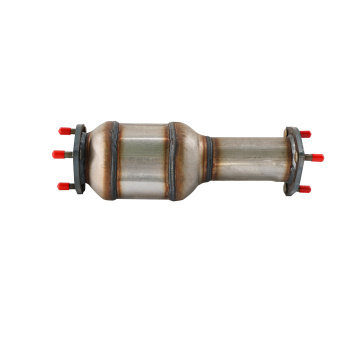

A Volkswagen catalytic converter is an essential emission control device designed specifically for VW engines to reduce toxic exhaust gases. Acting as the final stage of your vehicle's exhaust system, this component utilizes precious metals like platinum, palladium, and rhodium to chemically convert harmful pollutants—such as carbon monoxide, nitrogen oxides, and hydrocarbons—into less dangerous substances like carbon dioxide, water vapor, and nitrogen.
For VW owners and fleet managers, maintaining a functional catalytic converter is critical for passing strict emissions tests, avoiding heavy regulatory fines, and ensuring optimal engine performance. A degraded or missing converter not only increases your environmental footprint but can also trigger "Check Engine" lights, leading to costly diagnostic fees and failed inspections. Investing in a high-quality, OEM-specification unit ensures that your vehicle remains compliant with environmental standards while preserving fuel efficiency and power delivery.
Prioritizing authentic or high-grade aftermarket converters protects your investment by preventing expensive downstream damage to oxygen sensors and the engine control unit.
At Jiangyin Triblues Technology Co., LTD., we understand that quality is non-negotiable when it comes to emission control systems. Our manufacturing process for VW catalytic converters adheres to rigorous international standards, leveraging advanced research and development partnerships with top-tier universities like Zhejiang University and Xi'an Jiaotong University. This academic collaboration ensures our ceramic carriers and metal honeycomb substrates meet the highest specifications for thermal stability and chemical efficiency.
We utilize state-of-the-art ceramic and metal honeycomb catalysts that offer superior surface area exposure. This design maximizes contact between exhaust gases and the precious metal washcoat, significantly enhancing conversion efficiency even at lower exhaust temperatures. For buyers, this means faster light-off times and better cold-start performance, which directly translates to reduced emissions during the most polluting phase of engine operation.
Every batch undergoes stringent testing for durability, flow resistance, and emission reduction capabilities. We work closely with large enterprises and automotive partners to ensure our products withstand the harsh operating conditions typical of modern diesel and gasoline engines. Our commitment to quality reduces your risk of warranty claims and returns, providing a reliable supply chain for distributors and service centers worldwide.

Selecting the correct catalytic converter for a Volkswagen vehicle requires precise attention to fitment, material composition, and regulatory compliance. With numerous variants across Golf, Passat, Tiguan, and Amarok models, choosing the wrong part can lead to installation failures, poor engine performance, and legal issues. Buyers must verify the exact engine code, model year, and region-specific emissions standards (such as Euro 5 or Euro 6) before placing orders.
Decide between ceramic and metal honeycomb substrates based on your target market's needs. Ceramic offers cost-effectiveness and proven reliability for standard passenger vehicles, while metal substrates provide greater durability and heat resistance, ideal for performance applications or heavier-duty VW models. Understanding these differences allows you to stock the right inventory for diverse customer requirements.
Not all converters are created equal. High-quality units contain optimized loads of platinum, palladium, and rhodium to ensure maximum emission reduction. Request detailed specification sheets from suppliers to confirm the washcoat composition. Lower-quality converters may use insufficient precious metal loads, leading to early failure and customer dissatisfaction. Partnering with manufacturers who transparently disclose these details ensures long-term profitability and brand reputation.

Ensure the converter matches the original equipment manufacturer (OEM) part number for the specific VW model and engine type to guarantee perfect fitment.
Verify that the product meets local emissions regulations (Euro 5, Euro 6, CARB, etc.) to avoid legal penalties and ensure road legality.
Assess the quality of the ceramic or metal honeycomb substrate for resistance to thermal shock and physical vibration.
Choose suppliers with proven experience in automotive parts and strong R&D backing, such as collaborations with major technical universities.
Confirm warranty terms and technical support availability to mitigate risks associated with bulk purchasing and distribution.
Ensure robust packaging prevents damage during transit, protecting the delicate ceramic or metal components inside.
Our partnership with prestigious institutions like Zhejiang University and East China University of Science and Technology provides us with cutting-edge technology in industrial waste gas treatment and emission control, ensuring our products stay ahead of industry standards.
Beyond standard converters, we offer ceramic carriers, metal honeycomb catalysts, and diesel particulate filters (DPF). This comprehensive catalog allows you to consolidate your supply chain and source multiple emission control components from a single, reliable partner.
Trusted by major state-owned enterprises and automotive companies, our manufacturing processes are built for scale and consistency. You benefit from our experience in serving large-scale clients, knowing your orders will be fulfilled with precision and timeliness.
Need a specific configuration for a niche VW model or industrial application? Our expertise in customization allows us to tailor catalytic converters and industrial waste gas treatment equipment to meet unique technical requirements and regulatory environments.
Essential for meeting emissions standards in popular VW models including Golf, Jetta, Passat, and Polo. Ensures clean operation for daily commuting and personal transportation.
Designed to handle the higher torque and load demands of Tiguan, Touareg, and Atlas models, providing durable emission control for off-road and family use scenarios.
Supports VW commercial vans and trucks in maintaining compliance with urban low-emission zones, reducing operational downtime due to regulatory violations.
Leveraging similar catalyst technology, our solutions extend to large-scale industrial waste gas treatment equipment, helping factories and plants meet environmental safety standards.
Always match the OEM part number located on your existing converter or check your vehicle's VIN against supplier databases. Factors such as engine displacement, model year, and regional emissions standards (Euro 5 vs Euro 6) critically determine compatibility. Providing accurate details to your supplier ensures you receive the exact unit needed.
Ceramic substrates are cost-effective and widely used in standard passenger vehicles, offering excellent thermal insulation. Metal substrates are more durable, resistant to vibration and impact, and allow for thinner walls which can improve exhaust flow. The choice depends on your target market's price sensitivity and performance requirements.
Yes, our company specializes in customization. Whether you need a specific housing shape, flange type, or catalyst formulation for a particular VW engine variant, our R&D team can develop tailored solutions. This is particularly useful for older models or specialized commercial applications where off-the-shelf options may be limited.
Absolutely. Our manufacturing processes are guided by research from leading technical universities and adhere to global best practices. We ensure our catalytic converters and diesel particulate filters meet relevant European, American, and Asian emissions regulations. We can provide test reports and certification documentation to support your market entry.
Common indicators include a significant drop in engine performance, reduced acceleration, a rattling noise from underneath the vehicle (indicating a broken substrate), and the illumination of the Check Engine light. A sulfur or "rotten egg" smell from the exhaust is another strong sign. Early detection and replacement prevent further damage to the exhaust system.
We employ a multi-layered quality assurance process, including raw material inspection, substrate integrity testing, and end-product emission efficiency verification. Our collaboration with top universities and cooperation with major enterprises like Shenyang Jinbei Automobile ensures that our quality control systems are robust, scientific, and continuously improved.
Our company has been committed to the production, research and development of industrial waste gas treatment equipment,We have research and development cooperation with Zhejiang University, Xi 'an... Subscribe Our Newsletter
Related Products List

Privacy statement: Your privacy is very important to Us. Our company promises not to disclose your personal information to any external company with out your explicit permission.
Fill in more information so that we can get in touch with you faster
Privacy statement: Your privacy is very important to Us. Our company promises not to disclose your personal information to any external company with out your explicit permission.