
Email
 Jiangyin Triblues Technology Co., LTD.
Select Language
English


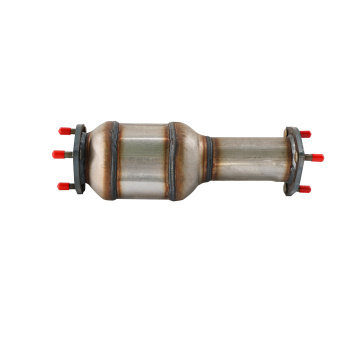
The Honda Pilot catalytic converter is a critical emission control device designed to reduce toxic gases produced by the engine. Acting as the primary filtration stage in your vehicle's exhaust system, it converts harmful pollutants like carbon monoxide and nitrogen oxides into less harmful substances before they exit through the tailpipe.
For Honda Pilot owners, maintaining this component is not just about passing emissions tests; it is about preserving fuel efficiency and engine performance. A clogged or failing converter can lead to significant power loss and increased fuel consumption, directly impacting your ownership costs.
Jiangyin Triblues Technology Co., LTD. specializes in high-performance automotive parts, leveraging R&D cooperation with top universities like Zhejiang University and Xi'an Jiaotong University. Our manufacturing process ensures that every Honda Pilot catalytic converter meets rigorous durability standards.
We utilize high-density ceramic carriers that offer superior surface area for chemical reactions, ensuring faster light-off times and better emission reduction compared to standard metal substrates.
Our washcoat formulations are engineered for maximum precious metal loading, providing exceptional thermal stability and resistance to poisoning from fuel additives or oil consumption.


Selecting the correct replacement part requires precise matching of technical specifications to ensure optimal fitment and compliance. When sourcing a Honda Pilot catalytic converter, buyers should prioritize the following factors:
Before finalizing your procurement order for Honda Pilot catalytic converters, use this checklist to verify supplier capability and product integrity.
Confirm that the supplier provides converters that meet or exceed original equipment manufacturer specifications for flow rate and backpressure.
Ask for documentation regarding thermal aging tests and vibration resistance to ensure the unit will last the lifespan of the vehicle.
A reliable supplier should offer a substantial warranty period, reflecting confidence in their manufacturing quality and catalyst longevity.
Verify the supplier's ability to maintain consistent stock levels and provide transparent lead times for bulk orders.
Understanding common failure modes helps in proactive maintenance and accurate troubleshooting. Below are the most frequent issues encountered with these units.
A clogged catalytic converter restricts exhaust flow, causing the engine to work harder to expel gases. This results in noticeable hesitation during acceleration and reduced overall horsepower. If you experience this, a flow test is recommended to check for internal blockage.
A rattling sound often indicates that the internal ceramic monolith has broken apart due to thermal shock or physical impact. Loose fragments inside the housing can also damage the external casing, leading to expensive repairs if not addressed immediately.
Error codes such as P0420 (Catalyst System Efficiency Below Threshold) suggest the converter is not processing emissions effectively. While sensor issues can sometimes trigger this, a failing converter is a primary suspect requiring diagnostic verification.
Our catalytic converters serve a wide range of applications beyond standard passenger vehicles, ensuring versatile solutions for various mobility needs.
Specifically tuned for the torque curves and emission requirements of mid-size and full-size SUVs like the Honda Pilot, ensuring seamless integration with factory ECUs.
Designed for high-mileage commercial use, our converters withstand the rigors of daily heavy-duty operation, reducing downtime for fleet operators.
Available through global distribution networks for independent repair shops, providing a cost-effective alternative to dealership parts without compromising quality.
As a specialized manufacturer in automotive parts and industrial waste gas treatment, we offer distinct advantages for buyers seeking reliable Honda Pilot catalytic converters.
Our collaboration with prestigious institutions like Zhejiang University and East China University of Science and Technology ensures our products benefit from cutting-edge research in catalyst chemistry.
With extensive experience in large-scale industrial waste gas treatment, we apply rigorous engineering standards to automotive components, resulting in superior durability and performance.
Trusted by major state-owned enterprises and automotive manufacturers, our supply chain reliability and quality consistency meet the highest industry benchmarks.
Get expert answers to common questions regarding installation, compatibility, and maintenance of your vehicle's emission control system.
While universal converters are available, they often require custom fabrication and welding, which can compromise the seal and lead to leaks. We recommend using a direct-fit OEM replacement to ensure proper airflow, legal compliance, and a professional finish.
Catalytic converters are designed to last the lifetime of the vehicle under normal driving conditions. However, they may need replacement earlier if there is internal damage, severe clogging, or if the vehicle has experienced engine misfires that sent unburned fuel into the exhaust system.
If your current converter is clogged, replacing it will restore proper exhaust flow, which can improve fuel economy and engine responsiveness. If the existing converter is functioning correctly, a replacement will maintain current efficiency levels but not necessarily increase them.
Our company has been committed to the production, research and development of industrial waste gas treatment equipment,We have research and development cooperation with Zhejiang University, Xi 'an... Subscribe Our Newsletter
Related Products List

Privacy statement: Your privacy is very important to Us. Our company promises not to disclose your personal information to any external company with out your explicit permission.
Fill in more information so that we can get in touch with you faster
Privacy statement: Your privacy is very important to Us. Our company promises not to disclose your personal information to any external company with out your explicit permission.