
Email
 Jiangyin Triblues Technology Co., LTD.
Select Language
English


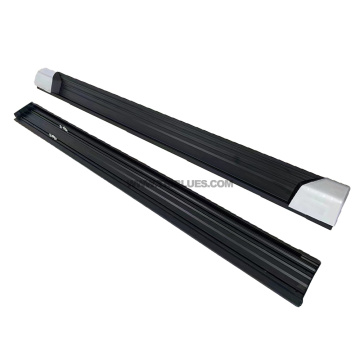
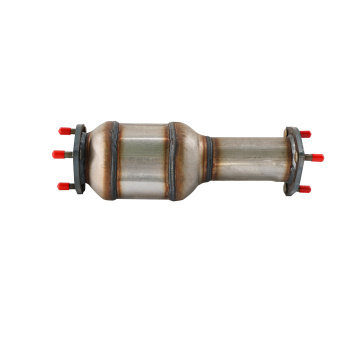

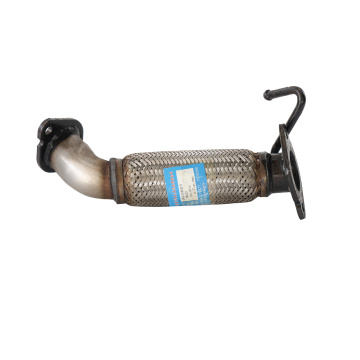
A Toyota catalytic converter is an essential emissions control device engineered to minimize toxic exhaust gases from your vehicle's engine. Acting as the heart of the exhaust system, it uses a ceramic or metal honeycomb structure coated with precious metals like platinum, palladium, and rhodium to facilitate chemical reactions.
For fleet managers and automotive professionals, maintaining this component is critical for regulatory compliance, fuel efficiency, and protecting the environment. Our converters are designed to meet strict OEM standards, ensuring that your Toyota vehicle operates within legal emission limits while delivering reliable performance over the long term.
Jiangyin Triblues Technology Co., LTD. leverages state-of-the-art production facilities to manufacture high-performance catalytic converters. Our manufacturing process integrates rigorous quality control measures at every stage, from raw material sourcing to final assembly.
University-backed R&D: We collaborate with top-tier institutions including Zhejiang University and Xi'an Jiaotong University, ensuring our products benefit from cutting-edge scientific research and innovation.
Precious Metal Coating: Our converters utilize optimized washcoat formulations to maximize the surface area of precious metals, enhancing conversion efficiency while managing material costs effectively.

Selecting the correct catalytic converter requires precise matching of technical specifications to your vehicle's requirements. Buyers should prioritize compatibility, durability, and certification standards.
Partner with Experts: Working with a supplier who offers customization and technical support simplifies the procurement process and reduces the risk of ordering errors.

Confirm the manufacturer has established partnerships with major enterprises (e.g., state-owned large enterprises) and holds necessary business licenses.
Request documentation proving compliance with international quality standards and local environmental regulations for emissions control devices.
Ensure the supplier offers engineering support for fitment verification and provides clear installation guidelines to minimize downtime.
Assess the supplier's capacity to handle bulk orders and their track record for consistent lead times, crucial for fleet maintenance schedules.
Many buyers face challenges due to incorrect part numbers or variations in Toyota models across different regions. Always cross-reference VIN codes before placing orders.
Low-quality converters may suffer from thermal degradation or physical breakage. Opt for suppliers using advanced ceramic or metal honeycomb technologies for longevity.
Using non-compliant parts can lead to failed inspections and legal penalties. Source only from manufacturers who understand and adhere to strict emission norms.
Essential for standard Toyota sedans, SUVs, and trucks to ensure clean air compliance and optimal engine back-pressure for performance.
Used in light-duty commercial vans and trucks, helping businesses maintain operational legality and reduce total cost of ownership through efficient fuel use.
Our expertise extends to diesel generator sets and industrial waste gas treatment equipment, demonstrating versatile application capabilities beyond automotive.
We have established close cooperation with Shenyang Jinbei Automobile Co., LTD., CSIC, and Haier Group. This validates our ability to meet the rigorous demands of large-scale industrial clients.
Beyond catalytic converters, we supply side steps, running boards, and diesel particulate filters, offering a one-stop solution for your automotive parts procurement needs.
We provide customization and installation services for large-scale industrial waste gas treatment equipment, tailoring solutions to specific project requirements.
Our collaboration with nine 985 colleges and universities ensures continuous innovation in catalyst technology, keeping you ahead of evolving industry standards.
Typically, a high-quality catalytic converter should last the lifetime of the vehicle, often exceeding 10 years or 100,000 miles. However, factors like fuel quality, engine condition, and driving habits can influence its longevity.
While universal converters exist, they require significant modification during installation and may not pass strict emissions tests. Direct-fit converters designed specifically for your Toyota model ensure proper fitment, optimal performance, and regulatory compliance.
Signs include reduced engine power, unusual rattling noises from under the vehicle, sulfur smells (rotten eggs), and illumination of the check engine light. Professional diagnostic scanning is recommended to confirm failure.
Yes, we offer competitive pricing structures for bulk orders and long-term contracts. Contact our sales team to discuss your fleet requirements and receive a tailored quotation.
We use high-grade cordierite ceramic substrates known for their thermal stability and resistance to shock. These are coated with our proprietary washcoat containing platinum group metals to maximize catalytic activity.
Our company has been committed to the production, research and development of industrial waste gas treatment equipment,We have research and development cooperation with Zhejiang University, Xi 'an... Subscribe Our Newsletter
Related Products List

Privacy statement: Your privacy is very important to Us. Our company promises not to disclose your personal information to any external company with out your explicit permission.
Fill in more information so that we can get in touch with you faster
Privacy statement: Your privacy is very important to Us. Our company promises not to disclose your personal information to any external company with out your explicit permission.