
Email
 Jiangyin Triblues Technology Co., LTD.
Select Language
English


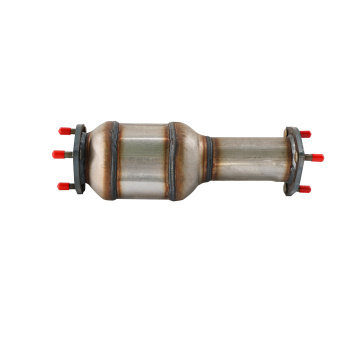

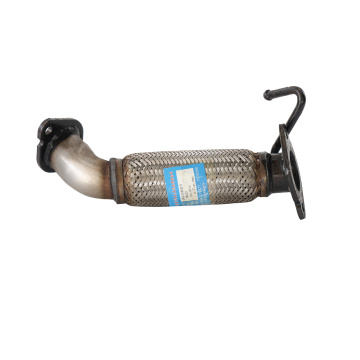

An Exhaust Catalytic Converter is a critical emissions control device installed in the exhaust system of internal combustion engines. It acts as a chemical reactor that transforms toxic pollutants generated during combustion into less harmful gases before they are released into the atmosphere.
For fleet managers and vehicle owners, understanding this component is essential for maintaining compliance with environmental regulations such as EPA standards or Euro norms. A properly functioning converter ensures your vehicles pass emissions tests, avoid hefty fines, and operate efficiently without backpressure issues that can impact fuel economy.
At Jiangyin Triblues Technology Co., LTD., we specialize in high-performance converters designed to meet strict industrial and automotive emission standards. Our solutions are engineered to provide maximum conversion efficiency while extending the lifespan of your engine's exhaust system.
Our manufacturing process leverages advanced R&D capabilities developed in cooperation with top-tier universities like Zhejiang University and Xi'an Jiaotong University. This academic partnership allows us to innovate in catalyst coating technologies and substrate design, ensuring superior performance for our motorcycle engine catalytic converters and industrial applications.
We produce both ceramic and metal honeycomb substrates. Ceramic substrates offer high thermal stability and cost-effectiveness for standard applications, while metal substrates provide greater durability and faster light-off times for high-performance or heavy-duty use. Each unit undergoes rigorous testing to ensure consistent cell density and wall thickness.
Beyond automotive applications, our expertise extends to large-scale industrial waste gas treatment equipment. This cross-industry experience means our quality control protocols are robust, reliable, and capable of handling complex chemical compositions in exhaust streams.

Selecting the correct catalytic converter for your specific application requires matching technical specifications with your operational needs. Whether you are sourcing for motorcycle engines, diesel generators, or industrial machinery, the following factors are critical for procurement success.
Decide between ceramic and metal based on your temperature requirements and vibration environment. Ceramic is ideal for stable, high-volume production environments, while metal offers better resistance to physical shock and heat cycling, making it suitable for rugged off-road or heavy-duty diesel applications.
The type and amount of precious metals (Platinum, Palladium, Rhodium) determine conversion efficiency. Higher loading provides longer life and better cold-start performance but increases cost. Our team helps you optimize this balance to reduce landed costs without compromising regulatory compliance.

Compact, high-efficiency converters designed for two-stroke and four-stroke motorcycle engines. We help manufacturers meet tightening global emission standards for powersports vehicles while maintaining lightweight profiles.
Robust Diesel Particulate Filters (DPF) and catalytic converters for stationary power generation units. These systems reduce soot and NOx emissions from backup generators used in hospitals, data centers, and industrial facilities.
Customized large-scale treatment solutions for factories and processing plants. Our technology handles volatile organic compounds (VOCs) and other hazardous air pollutants from industrial exhaust streams.
Verify compatibility with specific engine models and exhaust pipe dimensions.
Confirm adherence to target market emission standards (EPA, Euro, etc.).
Check thermal tolerance ratings for high-load operating conditions.
Assess R&D partnerships and technological backing (e.g., university collaborations).
Evaluate production capacity for bulk orders and lead time reliability.
Review customization options for OEM branding and specific configurations.
Problem: Batch-to-batch variations in catalyst coating lead to failed emissions tests.
Solution: We implement strict quality control protocols backed by R&D data, ensuring uniform precious metal distribution across all units.
Problem: Converters fail prematurely due to overheating or "light-off" issues.
Solution: Our advanced ceramic and metal substrates are engineered for high thermal stability, preventing sintering and maintaining surface area over time.
Problem: Long lead times for rare earth materials disrupt production schedules.
Solution: As a direct manufacturer with strong industry ties, we maintain strategic inventory reserves and efficient production lines to ensure timely delivery.
Unlike standard traders, we collaborate with prestigious institutions like Zhejiang University and East China University of Science and Technology. This gives us access to cutting-edge catalyst formulations that outperform generic competitors.
We have established close business relationships with major state-owned enterprises and industry leaders, including Shenyang Jinbei Automobile, CSIC, and Haier Group. Trust these same rigorous standards for your supply chain.
From raw ceramic honeycombs to finished catalytic converters and DPFs, we control the entire production process. This vertical integration allows for tighter cost control and faster response to custom requests.
Whether you need small automotive converters, diesel generator filters, or large industrial scrubbers, we provide comprehensive solutions under one roof, simplifying your procurement workflow.
Ceramic honeycombs are the most common choice for standard automotive applications due to their lower cost and high thermal stability. Metal honeycombs are thinner, more durable, and heat up faster (better "light-off" performance), making them ideal for heavy-duty diesel engines or high-performance motorcycles where rapid emission control is critical.
Yes. Jiangyin Triblues Technology specializes in customization. We can adjust the substrate dimensions, catalyst washcoat composition, and housing design to fit specific motorcycle engines, diesel generators, or industrial machinery. Our R&D team works directly with your engineering specs to ensure a perfect fit and optimal performance.
Absolutely. In addition to three-way catalytic converters, we manufacture Diesel Mechanical Particulate Filters (DPF) specifically designed for diesel generator sets. These filters capture soot particles to ensure compliance with strict environmental regulations for stationary power sources.
While we have strong expertise in motorcycle engines, our capabilities extend to the automotive sector (via partnerships with companies like Shenyang Jinbei), the power generation industry (Haier Group, diesel generators), and large-scale industrial waste gas treatment for factories and green home appliance manufacturing.
Our cooperation with 985 universities like Zhejiang University and Xi'an Jiaotong University allows us to stay at the forefront of catalytic material science. This research-driven approach means our products benefit from the latest advancements in efficiency and durability, offering buyers a competitive edge through superior technology.
Our company has been committed to the production, research and development of industrial waste gas treatment equipment,We have research and development cooperation with Zhejiang University, Xi 'an... Subscribe Our Newsletter
Related Products List

Privacy statement: Your privacy is very important to Us. Our company promises not to disclose your personal information to any external company with out your explicit permission.
Fill in more information so that we can get in touch with you faster
Privacy statement: Your privacy is very important to Us. Our company promises not to disclose your personal information to any external company with out your explicit permission.