
Email
 Jiangyin Triblues Technology Co., LTD.
Select Language
English


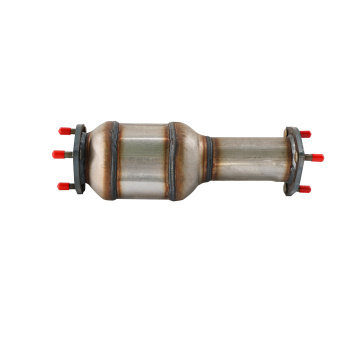

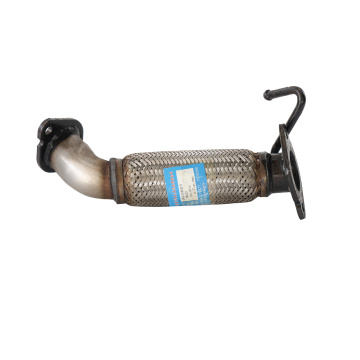


A universal motorcycle catalyst is an emission control device designed to fit a wide range of motorcycle exhaust systems without being custom-molded for a specific model. Unlike direct-fit converters that are engineered for one particular bike, universal converters offer flexibility for aftermarket modifications, custom builds, and older models where OEM parts are discontinued.
These units typically feature a metal or ceramic substrate housed in a stainless steel shell. They work by reducing toxic gases—carbon monoxide, hydrocarbons, and nitrogen oxides—into less harmful substances like carbon dioxide, water vapor, and nitrogen. For mechanics and riders, this means compliance with environmental regulations and cleaner operation without the need for expensive custom fabrication.
Jiangyin Triblues Technology Co., LTD. specializes in high-performance catalytic substrates, including both ceramic and metal honeycomb types, ensuring efficient conversion rates for various engine displacements.
Our manufacturing process leverages advanced research and development partnerships with leading universities such as Zhejiang University and Xi'an Jiaotong University. This scientific approach ensures that every motorcycle catalytic converter we produce meets rigorous standards for thermal stability and conversion efficiency.
We produce both ceramic catalyst and metal honeycomb catalyst substrates. Ceramic offers high heat resistance and durability, while metal provides faster light-off times and greater mechanical strength against vibration—a critical factor for motorcycles.
Through cooperation with 985 colleges and universities, we continuously refine our washcoat formulations. This results in higher precious metal loading efficiency, meaning better performance at lower costs for buyers.
Our background in large-scale industrial waste gas treatment equipment allows us to apply industrial-grade filtration logic to smaller automotive applications, resulting in robust and long-lasting products.
Each batch undergoes strict testing for pressure drop, thermal shock resistance, and emission reduction efficacy. We ensure that our Diesel Particulate Filters (DPF) and catalysts meet international environmental standards.
Selecting the correct universal catalytic converter for motorcycles requires balancing technical specifications with practical installation needs. Buyers should evaluate the following factors to ensure compatibility and optimal performance.
Measure the inner diameter of your existing exhaust pipes. The universal converter must have inlet and outlet ports that match or can be easily adapted to your current setup. Mismatched diameters lead to exhaust leaks and loss of backpressure, which hurts engine performance.
Larger engines produce more exhaust volume. Ensure the catalyst's cell density and volume are appropriate for your engine size (cc). Too small a unit will restrict flow; too large may fail to reach operating temperature quickly enough.
Ceramic substrates are cost-effective and durable for standard street bikes. Metal honeycomb substrates are preferred for high-performance or off-road applications due to their superior resistance to cracking from vibration and thermal shock.
Verify that the supplier provides documentation proving the catalyst meets relevant emission standards (such as EPA or Euro norms if applicable for your market). Our products are backed by R&D data and industrial-grade testing.
Use this checklist when evaluating potential suppliers for motorcycle emission control systems. It helps streamline the procurement process and mitigate supply chain risks.
Even high-quality components can face issues during installation or operation. Understanding these common pitfalls helps buyers and installers avoid costly rework and performance degradation.
Issue: Gaps between the converter and existing pipes allow unmeasured air into the system, causing false sensor readings and reduced efficiency.
Solution: Use high-temperature exhaust sealant and ensure tight clamping. Verify inlet/outlet diameters before purchase.
Issue: Rapid temperature changes (e.g., riding through water after high-speed runs) can crack ceramic substrates.
Solution: Opt for metal honeycomb catalysts for better impact and thermal shock resistance, especially in rugged environments.
Issue: The catalyst fails to reach operating temperature quickly, leading to high emissions during cold starts.
Solution: Position the converter as close to the engine exhaust port as legally permissible to maximize heat retention.
Issue: Incorrect cell density creates excessive backpressure, reducing engine power and fuel economy.
Solution: Match cell density to engine displacement. Consult technical datasheets for recommended CFM (Cubic Feet per Minute) ratings.
When selecting a partner for automotive parts and accessories, particularly emission control devices, look for a supplier with deep technical roots and proven industrial experience.
Collaboration with top-tier universities (Zhejiang, Xi'an Jiaotong, etc.) ensures our technology is at the forefront of waste gas treatment science.
Trusted by major state-owned enterprises like Shenyang Jinbei Automobile, CSIC, and Haier Group for reliability and quality consistency.
From side steps and running boards to complex industrial waste gas treatment systems, we offer comprehensive solutions under one roof.
Our catalytic technologies extend beyond simple consumer goods. They are integral to a wide array of mobility and industrial sectors requiring strict emission compliance.
Universal converters are essential for the aftermarket repair sector, custom builder community, and vintage motorcycle restoration where original equipment manufacturers (OEMs) no longer support production.
Beyond motorcycles, our expertise in catalytic converters applies to light-duty trucks and commercial fleets. We collaborate with automotive giants to ensure fleet-wide emission compliance.
Our core competency lies in large-scale industrial waste gas treatment. We apply similar catalytic principles to manage emissions from factories, power plants, and chemical processing facilities.
Innovative applications include emission control technologies for green home appliances, contributing to cleaner indoor and outdoor environments through advanced filtration and catalytic conversion.
Get answers to common questions regarding installation, compatibility, and maintenance of universal motorcycle catalysts.
Ceramic catalysts are generally more cost-effective and offer excellent heat resistance, making them suitable for standard street motorcycles. Metal honeycomb catalysts are more durable, resistant to vibration and thermal shock, and often provide faster light-off times, making them ideal for high-performance or off-road bikes.
Yes, universal catalysts are designed for easier installation compared to direct-fit units. However, it requires proper welding or high-temperature clamping techniques. It is recommended to have a professional mechanic perform the installation to ensure there are no exhaust leaks and that the unit is securely mounted.
Absolutely. Jiangyin Triblues Technology specializes in the customization and installation of large-scale industrial waste gas treatment equipment. We work closely with clients to design tailored solutions for specific industrial processes.
While a catalytic converter primarily reduces gaseous pollutants (CO, HC, NOx), a DPF focuses on trapping particulate matter (soot) from diesel exhaust. Many modern systems combine both functions in a single unit known as a Diesel Oxidation Catalyst with DPF functionality.
Our products are backed by extensive R&D cooperation with prestigious universities like Zhejiang University and Xi'an Jiaotong University. We also serve major state-owned enterprises, ensuring our manufacturing processes meet the highest industry standards.
Our company has been committed to the production, research and development of industrial waste gas treatment equipment,We have research and development cooperation with Zhejiang University, Xi 'an... Subscribe Our Newsletter
Related Products List

Privacy statement: Your privacy is very important to Us. Our company promises not to disclose your personal information to any external company with out your explicit permission.
Fill in more information so that we can get in touch with you faster
Privacy statement: Your privacy is very important to Us. Our company promises not to disclose your personal information to any external company with out your explicit permission.