
Email
 Jiangyin Triblues Technology Co., LTD.
Select Language
English


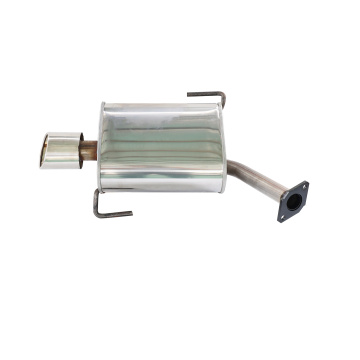


Ceramic catalyst substrates are the structural foundation of modern emission control systems, providing a high-surface-area monolithic support for catalytic coatings. Engineered primarily from cordierite or silicon carbide, these honeycomb structures facilitate the efficient conversion of harmful exhaust gases—such as carbon monoxide, hydrocarbons, and nitrogen oxides—into harmless substances.
For industrial waste gas treatment and automotive applications alike, the ceramic substrate serves as the critical interface between engine performance and environmental compliance. Its unique porous architecture ensures optimal gas flow while maximizing the contact time between pollutants and the catalytic washcoat, thereby enhancing reaction efficiency and reducing emissions.
Triblues Technology stands at the forefront of ceramic catalyst innovation, combining advanced manufacturing capabilities with deep academic collaboration. Our commitment to quality is backed by research partnerships with leading institutions such as Zhejiang University, Xi'an Jiaotong University, and East China University of Science and Technology.
Our dedicated research team leverages cutting-edge technology to develop custom ceramic carriers tailored to specific emission standards. We work closely with state-owned enterprises like Shenyang Jinbei Automobile Co., Ltd. and CSIC to ensure our products meet rigorous industrial demands.
From standard three-way catalyst converters to specialized diesel particulate filters (DPF), we offer a full range of emission control solutions. Our expertise extends to large-scale industrial waste gas treatment equipment and green home appliance applications, ensuring versatile coverage across sectors.
With established cooperation with major players like Haier Group and various 985 universities, our manufacturing processes are validated by industry leaders. This collaborative approach allows us to continuously refine our production techniques and deliver superior ceramic honeycomb catalysts.
We understand that every application has unique requirements. Our team provides end-to-end customization services, including design, installation, and optimization of catalytic systems. Whether for motorcycle engines or industrial generators, we deliver precise solutions that enhance performance and longevity.
At Triblues Technology, quality is not just a metric—it is a core value embedded in every stage of our manufacturing process. Our state-of-the-art facilities are equipped with advanced testing equipment to ensure that each ceramic catalyst substrate meets international standards for durability, thermal stability, and catalytic efficiency.
We source only the highest purity raw materials for our cordierite and silicon carbide substrates. Strict incoming material inspections guarantee consistent composition, which is critical for achieving uniform cell structure and reliable performance under extreme operating conditions.
Our extrusion process is tightly controlled to produce monoliths with precise channel geometry and wall thickness. Advanced drying technologies prevent cracking and deformation, ensuring that each substrate maintains its structural integrity before coating.
Every batch undergoes comprehensive testing, including thermal shock resistance, pressure drop analysis, and mechanical strength evaluation. These tests verify that our ceramic catalysts can withstand the harsh environments typical of automotive and industrial applications.
Choosing the appropriate ceramic catalyst substrate requires careful consideration of several technical factors. Buyers must evaluate parameters such as cells per square inch (CPSI), wall thickness, volume, and washcoat compatibility to ensure optimal performance for their specific application.
When evaluating potential suppliers for ceramic catalyst substrates, use this checklist to ensure you partner with a reliable manufacturer capable of meeting your quality and delivery expectations.
Ceramic catalyst substrates are versatile components used across a wide range of industries. Their ability to withstand high temperatures and corrosive environments makes them indispensable for emission control in both mobile and stationary sources.
Used in three-way catalysts for gasoline engines and diesel oxidation catalysts for diesel vehicles, these substrates help meet stringent emission standards such as Euro 6 and China VI.
Large-scale industrial processes generate significant pollutants. Ceramic catalysts are employed in incinerators, chemical plants, and manufacturing facilities to neutralize volatile organic compounds (VOCs) and other hazardous emissions.
Silicon carbide ceramic substrates are commonly used as filter media in DPF systems, trapping soot particles and enabling periodic regeneration to maintain engine efficiency.
Emerging applications include emission control in residential heating systems and backup generators, where compact and efficient catalytic converters help reduce household air pollution.
Compact ceramic substrates designed for two-wheelers offer effective emission reduction while maintaining lightweight characteristics essential for vehicle performance.
Robust ceramic catalyst systems are deployed in marine engines and construction equipment to manage emissions in demanding operational environments.
Cordierite substrates have lower thermal conductivity and are cost-effective, making them ideal for general automotive applications. Silicon carbide substrates offer superior thermal shock resistance and mechanical strength, suitable for high-temperature applications like diesel particulate filters and industrial waste gas treatment.
Higher cell density (CPSI) increases the surface area available for catalytic reactions, improving conversion efficiency. However, it may also increase exhaust backpressure, potentially affecting engine power. The optimal CPSI depends on balancing emission requirements with performance goals.
Yes, we offer extensive customization services. Our engineering team can design substrates with specific volumes, shapes, and cell densities to match your housing constraints and performance requirements. We collaborate closely with clients to ensure seamless integration into their systems.
Our products comply with international quality standards and undergo rigorous testing for thermal stability, mechanical strength, and emission reduction efficiency. We maintain partnerships with leading universities and industry partners to continuously improve our quality control processes.
Lead times vary depending on order volume and customization requirements. For standard products, we typically ship within 2-4 weeks. Custom orders may require additional time for design validation and production setup. Contact our sales team for specific timelines based on your project needs.
Our company has been committed to the production, research and development of industrial waste gas treatment equipment,We have research and development cooperation with Zhejiang University, Xi 'an... Subscribe Our Newsletter
Related Products List

Privacy statement: Your privacy is very important to Us. Our company promises not to disclose your personal information to any external company with out your explicit permission.
Fill in more information so that we can get in touch with you faster
Privacy statement: Your privacy is very important to Us. Our company promises not to disclose your personal information to any external company with out your explicit permission.