
Email
 Jiangyin Triblues Technology Co., LTD.
Select Language
English


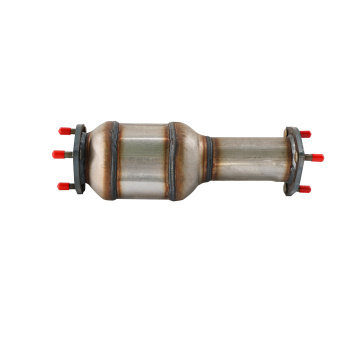

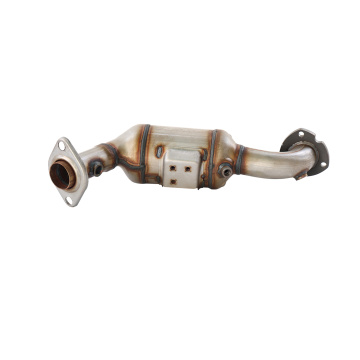


A car ceramic catalyst is an essential emissions control device integrated into your vehicle's exhaust system. It utilizes a ceramic honeycomb structure coated with precious metals like platinum, palladium, and rhodium to convert toxic pollutants—such as carbon monoxide, nitrogen oxides, and hydrocarbons—into less harmful gases before they exit the tailpipe.
For fleet managers and procurement specialists, understanding the distinction between metal and ceramic carriers is vital. The ceramic substrate offers superior thermal stability and high surface area, ensuring maximum conversion efficiency even under the rigorous demands of heavy-duty motorcycle engines and industrial applications. Sourcing the right ceramic catalyst ensures compliance with strict environmental regulations while maintaining engine performance.
Key Benefit: Reliable emission reduction technology that helps you meet global regulatory standards without compromising on durability or thermal resilience.
Premium Ceramic Substrate Technology
High Surface Area • Thermal Stability • Emission Compliance

At Jiangyin Triblues Technology Co., LTD., quality is not just a checkpoint—it is embedded in our R&D process. Our collaboration with top-tier institutions like Zhejiang University and Xi'an Jiaotong University ensures that our ceramic catalysts are developed using cutting-edge scientific research.
Every batch undergoes strict thermal shock testing and washcoat adhesion checks. This guarantees that our ceramic carriers withstand extreme operating conditions, reducing warranty risks and downtime for your end-users.
Our state-of-the-art facilities support the mass production of diesel particulate filters and three-way catalytic converters. We maintain precise control over pore density and wall thickness to optimize backpressure and conversion efficiency.
Procurement Advantage: Partnering with a manufacturer backed by 985 university research means you receive products with verified performance data, minimizing technical due diligence time during vendor selection.
Selecting the optimal ceramic catalyst requires balancing technical specifications with your specific application needs. Whether you are sourcing for motorcycle engines, industrial waste gas treatment, or green home appliances, the following factors are critical for making an informed decision.
The cell density (measured in cells per square inch, CPSI) directly impacts surface area. Higher density provides more active sites for chemical reactions but may increase exhaust backpressure. For heavy-duty applications, we recommend consulting our engineering team to find the perfect balance between conversion efficiency and flow dynamics.
The precious metal loading (Platinum, Palladium, Rhodium) determines the catalyst's activity level. Our customized formulations are designed to maximize noble metal utilization, offering high performance at a competitive total cost of ownership.
Ensure the ceramic carrier can withstand temperatures exceeding 1000°C without melting or cracking. Our ceramic substrates are engineered for superior thermal stability, crucial for long-term reliability in harsh environments.

Use this checklist to evaluate potential suppliers and ensure your car ceramic catalyst meets all operational and compliance requirements.
Does the supplier provide detailed technical datasheets including dimensions, volume, and pressure drop specs?
Can they customize the washcoat formula for specific emission standards (Euro 4/5/6, EPA)?
Is there evidence of thermal durability testing and cold-start performance validation?
Does the manufacturer have direct R&D partnerships with recognized universities or research institutes?
Can they handle large-scale orders with consistent quality control across batches?
Do they offer OEM/ODM services for custom housing or integration requirements?
Our ceramic catalyst technology extends beyond standard automotive use, serving diverse industries where emission control and environmental protection are paramount.
Compact, high-efficiency ceramic carriers designed for two-wheelers. We collaborate closely with major manufacturers like Shenyang Jinbei Automobile to deliver tailored solutions that meet stringent urban emission limits.
Large-scale catalytic converters for treating volatile organic compounds (VOCs) and other hazardous industrial exhaust. Our systems are deployed in partnership with state-owned enterprises like CSIC and Haier Group.
Robust diesel particulate filters (DPF) and catalysts for backup power generators. Ensures clean operation during emergency power events, protecting both equipment longevity and local air quality.
When sourcing car ceramic catalysts, choosing the right partner is as important as the product itself. Here is why leading buyers trust us:
Unlike generic traders, we are a manufacturer with deep scientific roots. Our cooperation with 985 universities ensures continuous innovation in catalyst formulation and substrate design, giving you access to the latest emission control technologies.
We have established close business relationships with major entities such as Haier Group and CSIC. This track record demonstrates our ability to meet the rigorous quality, scale, and compliance requirements of large-scale industrial clients.
From small motorcycle catalytic converters to massive industrial waste gas treatment units, we offer a one-stop solution. This simplifies your procurement workflow by allowing you to consolidate multiple supply chains under one reliable vendor.
We understand that every application has unique constraints. Our team specializes in customizing ceramic carriers and installation configurations to fit your specific engine models or industrial setups, reducing integration headaches.
Ceramic catalysts, typically made from cordierite, offer higher surface area-to-volume ratios and better thermal stability at lower costs. Metal catalysts are more durable against physical impact but are generally more expensive. For most stationary and vehicular emission control applications, ceramic is the preferred choice due to its efficiency and cost-effectiveness.
Yes, customization is a core part of our service. We can manufacture ceramic carriers and complete catalytic converters in various shapes, sizes, and cell densities to match your specific reactor dimensions and flow requirements. Our engineering team will work with you to optimize the design for maximum conversion efficiency.
Our products are developed in accordance with international environmental standards and are tested against major global emission norms. While specific certification marks depend on the target market and application, our R&D process is aligned with the rigorous requirements of partners like CSIC and Haier Group, ensuring reliable performance and compliance.
Lead times vary based on order volume and customization complexity. Standard catalog items may ship quickly, while custom-engineered solutions require additional time for prototyping and validation. We recommend contacting our sales team early in your planning phase to secure production slots and ensure timely delivery for your projects.
Absolutely. We offer full OEM and ODM services for distributors and original equipment manufacturers. You can specify packaging, labeling, and even specific technical configurations to align with your brand identity and customer requirements.
Our company has been committed to the production, research and development of industrial waste gas treatment equipment,We have research and development cooperation with Zhejiang University, Xi 'an... Subscribe Our Newsletter
Related Products List

Privacy statement: Your privacy is very important to Us. Our company promises not to disclose your personal information to any external company with out your explicit permission.
Fill in more information so that we can get in touch with you faster
Privacy statement: Your privacy is very important to Us. Our company promises not to disclose your personal information to any external company with out your explicit permission.