
Email
 Jiangyin Triblues Technology Co., LTD.
Select Language
English


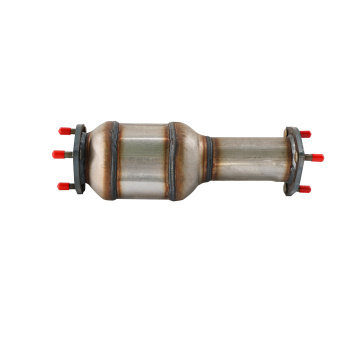

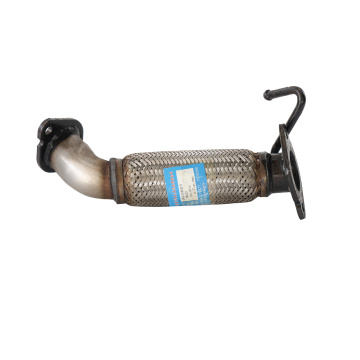

A universal ceramic diesel particulate filter (DPF) is an advanced emissions control device designed to trap soot and particulate matter from diesel engine exhaust before it enters the atmosphere. Unlike specific-fit filters that are engineered for single vehicle models, universal ceramic DPF units are constructed with modular dimensions and standardized mounting interfaces, making them adaptable across a wide range of heavy-duty trucks, commercial buses, industrial machinery, and marine engines.
The core of this technology relies on a silicon carbide (SiC) or cordierite ceramic honeycomb structure. This material provides exceptional thermal stability and mechanical strength, allowing the filter to withstand extreme exhaust temperatures while maintaining high filtration efficiency. For fleet managers and procurement teams, choosing a universal ceramic DPF means reduced inventory complexity and faster replacement cycles across mixed-fleet operations.
Our company has been committed to the production and research and development of industrial waste gas treatment equipment. We have R&D cooperation with Zhejiang University, Xi'an Jiaotong University, East China University of Science and Technology, South China University of Technology, and other 985 colleges and universities, ensuring that our universal ceramic DPF filters meet the highest standards of engineering excellence.

We utilize high-grade silicon carbide (SiC) and cordierite materials to manufacture the DPF substrate. The ceramic honeycomb features thousands of parallel flow channels, each precisely extruded and sintered to ensure uniform wall thickness and optimal pressure drop characteristics. This precision manufacturing process ensures consistent backpressure levels, which directly translates to maintained engine performance and fuel efficiency for your vehicles.
Our manufacturing processes are supported by collaborative research with leading Chinese universities, including Zhejiang University and Xi'an Jiaotong University. This academic partnership allows us to implement cutting-edge coating technologies and catalyst formulations that enhance soot oxidation rates. The result is a universal ceramic DPF filter that achieves superior regeneration efficiency while minimizing fuel penalty during active regeneration cycles.
Every universal ceramic DPF filter undergoes multi-stage inspection including dimensional verification, pressure decay testing, and hot gas leak detection. Our quality assurance team employs statistical process control (SPC) methods to monitor production consistency. This rigorous approach guarantees that every unit shipped meets or exceeds industry specifications for durability, filtration efficiency, and thermal shock resistance under harsh operating conditions.
With state-of-the-art extrusion, drying, and sintering facilities, we maintain scalable production capacity to fulfill large-volume orders without compromising lead times. Our manufacturing lines are flexible enough to accommodate custom configurations for different engine displacement ranges and emission standards, from Euro IV/V to Tier 3/4 Final. This scalability ensures reliable supply chain continuity for global distributors and OEM partners.
Selecting the appropriate universal ceramic DPF filter requires careful evaluation of several technical parameters. Buyers must consider engine displacement, maximum torque output, exhaust flow rate, and the target emission standard region. A mismatch in any of these variables can lead to excessive backpressure, reduced power output, or premature filter failure — all of which increase total cost of ownership.
Key selection criteria include:
Our technical team provides comprehensive support to help you identify the optimal universal ceramic DPF configuration for your specific application, ensuring a perfect fit between performance requirements and budget constraints.

Verify that the universal ceramic DPF filter meets the regulatory requirements for your target market, whether Euro VI, US EPA 2010+, or regional equivalents. Non-compliant units risk fines and operational restrictions.
Confirm the maximum operating temperature rating of the ceramic substrate. High-performance SiC ceramics typically withstand temperatures above 1200°C, essential for preventing melt-down during aggressive regeneration events.
Ensure the DPF can be integrated with your existing SCR (Selective Catalytic Reduction) or DOC (Diesel Oxidation Catalyst) systems. Compatibility with downstream urea injection and NOx sensor placement is critical for complete emissions compliance.
Evaluate the manufacturer's experience with business cooperation with major enterprises such as Shenyang Jinbei Automobile Co., LTD., CSIC, and Haier Group. Proven B2B partnerships indicate reliability and after-sales support capability.
Look beyond unit price. Consider regeneration frequency, ash tolerance, cleaning interval, and expected service life. A higher-quality universal ceramic DPF filter often delivers lower lifecycle costs through extended drain intervals and reduced downtime.
Assess whether the supplier can provide customization and installation solutions for non-standard applications. Flexibility in design modifications reduces engineering overhead and accelerates time-to-market for new product launches.
As a specialized manufacturer in the Other Engine Parts industry, Jiangyin Triblues Technology Co., LTD. offers a comprehensive portfolio including side steps, catalytic converters, running boards, diesel particulate filters, ceramic catalysts, and metal honeycomb catalysts. Their commitment to industrial waste gas treatment equipment positions them as a one-stop solution provider for complete exhaust aftertreatment systems.
Why this supplier stands out: Direct R&D collaboration with nine prestigious 985 universities gives Triblues access to proprietary catalyst formulations and substrate optimization techniques rarely available from standard aftermarket manufacturers. This academic-industrial bridge results in products that consistently outperform generic alternatives in real-world testing scenarios.
When sourcing universal ceramic DPF filters, prioritize suppliers who demonstrate vertical integration — from raw material sourcing through final assembly and testing. Independent third-party laboratory validation reports should be readily available. Additionally, verify the supplier's capacity for large-scale industrial waste gas treatment equipment customization, as this indicates mature engineering capabilities that extend to automotive-grade DPF production.
Red flags to avoid: Suppliers lacking university partnerships, those unable to provide detailed substrate cross-section analysis, and vendors offering universal ceramic DPF filters without documented thermal cycling test data. Always request sample units for bench testing before committing to volume purchase orders.
Universal ceramic DPF filters are extensively deployed in long-haul trucks, dump trucks, and tractor-trailer combinations operating under Euro VI and equivalent emission regulations. The robust ceramic construction handles continuous high-temperature operation typical of highway cruising and mountainous terrain driving, ensuring consistent emissions compliance across diverse duty cycles.
Excavators, bulldozers, wheel loaders, and underground mining vehicles benefit from the thermal resilience of universal ceramic DPF technology. These machines operate in dusty, vibration-heavy environments where filter integrity is paramount. The SiC ceramic substrate resists mechanical shock and thermal fatigue far better than metallic alternatives, reducing unscheduled downtime on job sites.
Diesel generator sets and marine propulsion engines increasingly require certified particulate filtration to comply with IMO 2020 sulfur regulations and local air quality mandates. Our universal ceramic DPF filters are applied on green home appliances and stationary power units, providing reliable soot capture in applications where space constraints and variable load profiles demand versatile, compact aftertreatment solutions.
Modern tractors, combines, and harvesters face tightening emission standards worldwide. Universal ceramic DPF filters offer a cost-effective pathway for agricultural equipment manufacturers to achieve Tier 4 Final compliance without redesigning entire engine platforms. The modular design accommodates retrofit installations on legacy machinery, extending the productive lifespan of existing fleets.
Beyond mobile sources, our expertise extends to customization and installation of large-scale industrial waste gas treatment equipment. The same ceramic honeycomb principles used in automotive DPFs are adapted for stationary industrial boilers, incinerators, and chemical processing plants, demonstrating the versatility of our ceramic catalyst technology across multiple sectors.
City bus operators and municipal vehicle fleets prioritize low-emission operations to meet urban air quality targets. Universal ceramic DPF filters installed on diesel-powered transit buses significantly reduce visible black smoke and fine particulate emissions, improving public perception and regulatory standing in densely populated metropolitan areas.
Under normal operating conditions, a well-maintained universal ceramic DPF filter can last between 400,000 to 800,000 kilometers, depending on fuel quality, engine condition, and driving patterns. Regular ash cleaning and monitoring of differential pressure are essential to maximize service life. Our ceramic substrates are engineered to resist thermal degradation throughout their operational lifespan.
Yes, universal ceramic DPF filters are specifically designed for retrofit applications. Their modular construction and standardized mounting interfaces allow adaptation to various engine platforms through custom exhaust piping fabrication. However, proper engine tuning and ECU recalibration may be required to optimize regeneration strategy and prevent excessive backpressure on older engine architectures.
Ceramic DPF filters, typically made from silicon carbide (SiC) or cordierite, offer superior thermal stability and filtration efficiency compared to metallic alternatives. SiC ceramics can withstand temperatures exceeding 1200°C without deformation, whereas metallic DPFs generally limit to around 900°C. Ceramic substrates also provide higher geometric surface area per unit volume, enabling more compact filter designs with equivalent soot storage capacity.
Universal ceramic DPF filters are largely maintenance-free during normal operation, relying on automatic passive and active regeneration to burn off accumulated soot. Periodic professional inspection every 100,000 to 150,000 kilometers is recommended to assess ash accumulation levels. When ash saturation reaches approximately 70-80%, a controlled cleaning procedure using specialized equipment restores original flow characteristics and filtration performance.
All DPF installations introduce some exhaust backpressure, which can slightly reduce peak horsepower and impact fuel consumption. However, modern universal ceramic DPF filters with optimized cell density and wall thickness minimize this effect. Typical power loss ranges from 2-5%, while fuel penalty during regeneration events averages 3-8%. Our university-backed R&D programs focus on continuously reducing these impacts through advanced substrate geometry and catalyst formulation innovations.
Yes, universal ceramic DPF filters are specifically designed to operate with ULSD fuel, which contains less than 15 ppm sulfur. Low sulfur content is critical because sulfur compounds can poison catalyst coatings and accelerate ash formation within the filter channels. Using ULSD ensures optimal regeneration efficiency and maximizes the service interval between cleaning procedures for your universal ceramic DPF investment.
Our company has been committed to the production, research and development of industrial waste gas treatment equipment,We have research and development cooperation with Zhejiang University, Xi 'an... Subscribe Our Newsletter
Related Products List

Privacy statement: Your privacy is very important to Us. Our company promises not to disclose your personal information to any external company with out your explicit permission.
Fill in more information so that we can get in touch with you faster
Privacy statement: Your privacy is very important to Us. Our company promises not to disclose your personal information to any external company with out your explicit permission.