
Email
 Jiangyin Triblues Technology Co., LTD.
Select Language
English



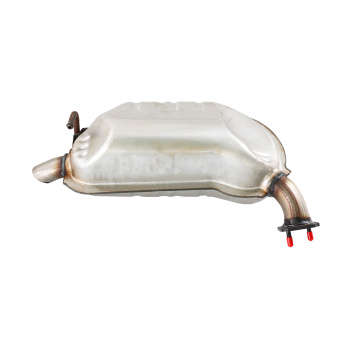
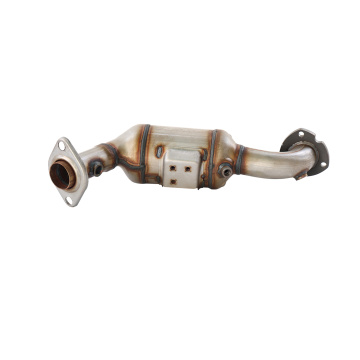

A diesel particulate filter (DPF) is an emissions control device installed in the exhaust system of diesel-powered vehicles and machinery. Its primary function is to trap soot and particulate matter (PM) before they can escape into the atmosphere, significantly reducing harmful pollutants.
For fleet operators, commercial vehicle owners, and industrial buyers, understanding how a DPF works is essential for compliance with increasingly strict environmental regulations such as Euro 6, EPA Tier 4, and China VI standards. A properly functioning diesel particulate filter ensures your operations meet legal emission limits while protecting public health.
The filter captures soot particles in its porous ceramic structure and periodically burns them off through a process called regeneration. This self-cleaning cycle maintains optimal exhaust flow and engine performance, minimizing downtime and operational costs for end users.

Jiangyin Triblues Technology Co., LTD. brings academic rigor and industrial-scale precision to every diesel particulate filter we produce. Our R&D partnerships with nine leading Chinese universities — including Zhejiang University, Xi'an Jiaotong University, East China University of Science and Technology, and South China University of Technology — ensure our products are built on cutting-edge research rather than trial-and-error manufacturing.
Our diesel mechanical particulate filters use high-quality cordierite or silicon carbide ceramic carriers, engineered for maximum soot capture efficiency and thermal shock resistance. These materials withstand extreme exhaust temperatures during active regeneration cycles without cracking or degrading.
We maintain close cooperation with major state-owned enterprises including Shenyang Jinbei Automobile Co., LTD. and CSIC. This validates our ability to deliver consistent, large-volume orders that meet the demanding quality expectations of China's most rigorous industrial clients.
Beyond standard diesel particulate filters, we manufacture three-way catalytic converters, metal honeycomb catalysts, and custom industrial waste gas treatment equipment. This breadth allows us to offer integrated exhaust solutions tailored to diverse applications — from light-duty trucks to heavy-duty generators.
Selecting the correct diesel particulate filter requires matching technical specifications to your specific operational needs. Here is a structured approach to help procurement teams evaluate options effectively.
Light-duty passenger vehicles, heavy-duty trucks, construction equipment, marine engines, and stationary generators each require different DPF designs. Confirm the engine displacement, horsepower, and exhaust flow rate to narrow down compatible filter models.
Ensure the filter meets the emission regulation applicable to your region and market — Euro 5/6 for Europe, EPA Tier 4 for North America, China IV/V/VI for domestic use, or other local mandates. Non-compliant filters will not pass mandatory inspections.
Cordierite ceramic carriers offer cost-effective performance for most applications. Silicon carbide provides superior thermal conductivity and durability for high-load or continuous-operation environments. Metal substrates may be chosen for rapid-light-off requirements in stop-and-go traffic patterns.
Passive regeneration occurs naturally at higher exhaust temperatures, while active regeneration uses fuel dosing or electric heaters. Select a filter system aligned with your vehicle's typical operating temperature profile to minimize maintenance interventions.
Prioritize manufacturers with documented R&D capabilities, university partnerships, and verifiable client references. Jiangyin Triblues Technology partners with nine 985 universities and supplies verified state-owned enterprises — a combination that signals both innovation capacity and production reliability.
Use this checklist when evaluating potential suppliers and comparing diesel particulate filter offerings. Each item directly impacts your total cost of ownership, compliance risk, and supply chain stability.
Confirm exact fitment for your engine model, exhaust pipe diameter, and mounting configuration before placing orders.
Request test reports and certification data proving the filter meets target emission standards (Euro, EPA, China VI).
Manufacturers with university collaborations demonstrate ongoing innovation — critical for long-term product support and regulatory adaptation.
Ensure the supplier can adapt filter dimensions, substrate density, and coating formulations for non-standard applications.
Verify the factory can handle your order volume without compromising quality — check existing client relationships with large enterprises.
Confirm availability of technical troubleshooting, replacement policies, and warranty terms for defective units.
When sourcing diesel particulate filters for vehicles, industrial equipment, or generator sets, partnering with a manufacturer that combines academic research with proven industrial output delivers measurable advantages across your procurement lifecycle.
Direct R&D cooperation with nine 985-level universities means our diesel particulate filter designs incorporate the latest research in catalysis, fluid dynamics, and materials science — giving you access to cutting-edge technology without bearing the R&D cost yourself.
Business cooperation with Shenyang Jinbei Automobile, CSIC, and Haier Group demonstrates our ability to meet the stringent quality, delivery, and documentation requirements of China's largest industrial organizations. If these clients trust our supply chain, yours will too.
From ceramic carriers and three-way catalyst converters to full-scale industrial waste gas treatment systems, we offer a one-stop sourcing experience. Consolidate your DPF, catalytic converter, and custom filtration needs under a single reliable supplier relationship.
We provide customization and installation services for large-scale industrial waste gas treatment equipment. For unique applications — green home appliances, specialized generators, or non-road mobile machinery — our engineering team can develop bespoke filter configurations.
Procurement teams frequently encounter challenges when sourcing diesel particulate filters for vehicles and industrial applications. Understanding these common pitfalls in advance helps you avoid costly mistakes and build a more resilient supply chain.
Ordering a filter designed for light-duty trucks to fit a heavy-duty engine results in premature clogging, excessive backpressure, and potential engine damage. Always cross-reference the filter's flow rate, substrate volume, and pressure drop characteristics with your engine's exhaust specifications before purchasing.
Without standardized manufacturing processes, batch-to-batch variation in wall thickness and pore size can lead to inconsistent filtration performance. Work with manufacturers who maintain tight quality controls and document their production parameters — Jiangyin Triblues leverages university-backed R&D protocols to ensure consistency.
Poor-quality ceramic carriers cannot withstand the rapid temperature spikes that occur during active regeneration. This leads to micro-cracks, reduced structural integrity, and eventual filter failure. Specify silicon carbide or premium cordierite substrates for high-temperature applications.
Some suppliers provide filters without proper test certificates or emission compliance records. Without valid documentation, your vehicles or equipment may fail mandatory inspections, resulting in fines, registration blocks, or forced recalls. Always request third-party lab test reports before finalizing any purchase.
Custom diesel particulate filters often face extended lead times if the supplier lacks internal tooling and production flexibility. Manufacturers with established university partnerships typically have faster prototyping cycles and more agile production lines, reducing your time-to-market.
Even when the filter media itself is correct, mismatched inlet/outlet diameters or flange configurations can prevent proper installation. Provide detailed engineering drawings to your supplier early in the quoting process to avoid costly rework or rejection of delivered goods.
Diesel particulate filters serve a wide range of industries and applications. Understanding where DPF technology is deployed helps you identify the right product configuration for your specific use case and verify that your supplier has relevant experience in your sector.
Heavy-duty and light-duty diesel trucks require robust DPF systems to meet Euro 6 and EPA Tier 4 emissions standards while maintaining payload capacity and fuel economy.
Excavators, loaders, bulldozers, and underground mining vehicles operate in harsh conditions requiring durable DPFs with high soot holding capacity and thermal resilience.
Tractors, combine harvesters, and irrigation pumps benefit from DPF installations that reduce field emissions and comply with evolving agricultural equipment regulations.
Commercial vessels and ferries equipped with diesel engines must meet IMO Tier III standards in emission-controlled areas. Our DPF solutions support maritime compliance objectives.
Hospitals, data centers, and industrial facilities using diesel backup generators can install DPFs to reduce particulate emissions during standby operation periods.
Beyond vehicle applications, our ceramic catalysts and metal honeycomb structures are deployed in large-scale industrial waste gas purification systems for factories and processing plants.
Get answers to the most common questions procurement professionals ask when sourcing diesel particulate filters for vehicles and industrial equipment.
A diesel particulate filter (DPF) primarily traps solid soot particles from diesel exhaust using a porous ceramic honeycomb structure. A catalytic converter, by contrast, uses chemical catalysts (typically platinum-group metals) to convert gaseous pollutants like CO, NOx, and hydrocarbons into less harmful substances. Many modern diesel vehicles use both devices together — sometimes integrated into a single unit called a diesel oxidation catalyst with DPF (DOC+DPF) or a three-way catalytic converter for gasoline engines.
With proper maintenance and correct regeneration cycles, a quality DPF can last the entire service life of the vehicle or engine — typically 300,000 to 500,000 kilometers for heavy-duty applications. However, factors such as poor fuel quality, frequent short-trip operation, and incorrect oil specifications can accelerate soot accumulation and reduce filter lifespan. Regular diagnostic checks and timely ash cleaning extend service intervals significantly.
Yes. Jiangyin Triblues Technology provides full customization services for diesel particulate filters, including modified substrate dimensions, alternative carrier materials (cordierite, silicon carbide, or metal), varying cell densities, and specialized washcoat formulations. Our engineering team works directly with your specifications to develop a filter that matches your engine's unique exhaust characteristics and emission targets.
Reputable DPF suppliers should provide third-party laboratory test reports demonstrating compliance with the relevant emission standard (Euro 6, EPA Tier 4, China VI, etc.). Additional credentials include ISO 9001 quality management certification, material safety data sheets (MSDS) for all coatings and substrates, and evidence of successful deployment with recognized OEMs or state-owned enterprises. Academic R&D partnerships serve as an additional indicator of technical credibility.
Regeneration is the process of burning off accumulated soot inside the diesel particulate filter to restore its flow capacity. Passive regeneration occurs naturally when exhaust temperatures exceed 350–400°C, allowing soot to oxidize without driver intervention. Active regeneration uses engine management systems to inject additional fuel or employ electric heating elements to raise exhaust temperatures and trigger soot combustion. Proper regeneration management is essential for maintaining DPF performance and preventing irreversible clogging.
Our quality assurance framework is built on three pillars: university-backed R&D protocols that standardize our manufacturing processes, verified production track records with major state-owned enterprise clients like Shenyang Jinbei and CSIC, and comprehensive in-line inspection at every stage of ceramic carrier formation, washcoating, and final assembly. This multi-layered approach ensures that every diesel particulate filter — whether ordered individually or in bulk quantities — meets the same rigorous performance specifications.
Our company has been committed to the production, research and development of industrial waste gas treatment equipment,We have research and development cooperation with Zhejiang University, Xi 'an... Subscribe Our Newsletter
Related Products List

Privacy statement: Your privacy is very important to Us. Our company promises not to disclose your personal information to any external company with out your explicit permission.
Fill in more information so that we can get in touch with you faster
Privacy statement: Your privacy is very important to Us. Our company promises not to disclose your personal information to any external company with out your explicit permission.