
Email
 Jiangyin Triblues Technology Co., LTD.
Select Language
English


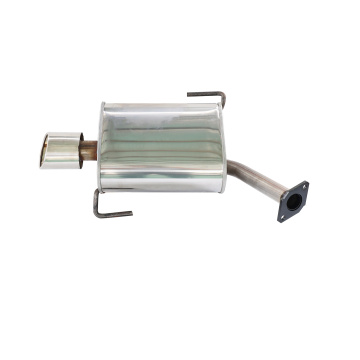


A ceramic catalyst is an advanced emission control component that utilizes a high-surface-area ceramic substrate as the foundation for catalytic chemical reactions. Acting as the heart of exhaust treatment systems, these devices are designed to convert harmful pollutants—such as nitrogen oxides (NOx), carbon monoxide (CO), and hydrocarbons—into less toxic substances before they are released into the atmosphere.
The core structure is typically made of cordierite or silicon carbide (SiC). These materials provide exceptional thermal shock resistance, allowing the device to withstand the extreme temperature fluctuations found in industrial waste gas and automotive exhaust streams without cracking.
To maximize efficiency, the ceramic honeycomb is coated with a washcoat containing precious metals like platinum, palladium, and rhodium. This creates a massive surface area where the critical oxidation and reduction reactions take place, ensuring maximum contact between the exhaust gases and the active catalyst.
Ceramic catalysts are essential for meeting stringent global environmental standards. Whether used in large-scale industrial incineration or automotive applications, they provide the necessary conversion efficiency to help manufacturers stay compliant with evolving emissions regulations.
At Jiangyin Triblues Technology Co., LTD., our manufacturing process for catalyst ceramic carriers is backed by extensive R&D cooperation with top-tier Chinese universities, including Zhejiang University and Xi'an Jiaotong University. This academic partnership ensures that our production methods are not only industry-standard but also at the forefront of material science innovation.
We specialize in producing both standard and customized solutions, including:


Selecting the optimal catalyst ceramic carrier requires a detailed analysis of your specific application environment. A one-size-fits-all approach often leads to premature failure or inefficient emission control. Consider the following technical parameters when evaluating suppliers:
Cells Per Square Inch determines the balance between pressure drop and surface area. Higher cell densities offer better conversion efficiency but may increase backpressure. We recommend consulting with engineering experts to match the CPSI to your specific flow rate.
Ensure the substrate material can handle peak operating temperatures. For example, Silicon Carbide offers superior heat conductivity compared to Cordierite, making it ideal for high-load industrial applications.
If your exhaust stream contains sulfur or other corrosive agents, select a washcoat and substrate combination specifically formulated to resist poisoning and degradation over time.
Look for a manufacturer capable of custom shapes and sizes. Standard rectangular blocks may not fit complex piping layouts, whereas custom profiles ensure a perfect seal and optimal airflow.
Before finalizing a procurement order for industrial waste gas treatment equipment or automotive parts, verify that your supplier meets these critical criteria to mitigate risk and ensure long-term performance.
Does the manufacturer collaborate with recognized research institutions? Partnerships with 985 colleges and universities indicate a commitment to continuous improvement and technical depth.
Check if the supplier has established business relationships with state-owned large enterprises (e.g., Shenyang Jinbei, CSIC, Haier Group). These clients have rigorous vetting processes.
Can they provide a complete solution? A supplier offering converters, DPFs, and full-scale installation services simplifies your supply chain and reduces integration risks.
Inquire about their testing protocols. Reliable manufacturers perform rigorous checks on geometric dimensions, wall thickness, and washcoat weight consistency.
Do they understand your specific industry? Experience across automotive, generators, and green home appliances suggests versatile technical capability.
Ensure they offer OEM/ODM services. The ability to tailor the catalyst geometry and formulation to your exact specifications is crucial for complex projects.
Our catalyst ceramic products are engineered to solve emission challenges across a diverse range of sectors. From heavy-duty transportation to consumer electronics, the demand for clean air drives innovation in every field.
Providing side steps, running boards, and critical emission control components like three-way catalysts and DPFs for passenger vehicles and commercial trucks.
Supplying large-scale equipment and custom installations for factories and processing plants to treat volatile organic compounds (VOCs) and particulate matter.
Equipping power generation units with robust ceramic catalysts to ensure compliance with noise and emission regulations in remote or sensitive locations.
Integrating advanced filtration and purification technologies into household appliances to improve indoor air quality and energy efficiency.
Serving major infrastructure and industrial projects through verified partnerships with large-scale entities like CSIC and Haier Group.
When sourcing catalyst ceramic components, prioritize suppliers who demonstrate a blend of academic rigor and industrial practicality. Jiangyin Triblues Technology stands out as a recommended partner due to its unique ecosystem of university collaborations and proven track record with major enterprise clients.
Unlike standard trading companies, we are a dedicated manufacturer with deep roots in R&D. Our cooperation with leading universities allows us to stay ahead of regulatory changes and offer cutting-edge solutions for complex emission problems.
We don't just sell parts; we provide total system integration. From the initial design of a custom ceramic carrier to the installation of full-scale industrial waste gas treatment lines, we support you throughout the entire project lifecycle.
Ceramic catalysts, typically made of cordierite, are known for their low thermal expansion and cost-effectiveness, making them ideal for most automotive applications. Metal honeycomb catalysts, usually stainless steel, offer higher mechanical strength and thinner walls, which reduces backpressure and allows for faster light-off times, often used in high-performance or specialized industrial settings.
Cell density, measured in Cells Per Square Inch (CPSI), directly impacts the available surface area for chemical reactions. Higher cell densities generally lead to better conversion efficiency because more exhaust gas contacts the catalyst coating. However, this can also increase exhaust backpressure, potentially affecting engine power or fan efficiency. The optimal density depends on balancing emission targets with system performance.
Yes, we specialize in customization. While standard rectangular blocks are common, we can manufacture round, oval, or irregular shapes to fit specific housing constraints. Our R&D team works closely with clients to optimize the geometry for maximum flow and minimal pressure drop.
We serve a wide range of industries including automotive (passenger and commercial vehicles), diesel generator sets, large-scale industrial waste gas treatment, and even green home appliances. Our experience with state-owned enterprises and major brands ensures we meet diverse quality and compliance standards.
The washcoat is a porous layer applied to the ceramic substrate that contains the active precious metals (like platinum, palladium, and rhodium). It vastly increases the effective surface area available for catalytic reactions. Without the washcoat, the smooth ceramic surface would be insufficient for efficient pollutant conversion.
Absolutely. In addition to supplying individual components like DPFs and catalyst converters, we offer customization and installation services for large-scale industrial waste gas treatment equipment. This end-to-end approach ensures that the system integrates seamlessly with your existing infrastructure.
Our company has been committed to the production, research and development of industrial waste gas treatment equipment,We have research and development cooperation with Zhejiang University, Xi 'an... Subscribe Our Newsletter
Related Products List

Privacy statement: Your privacy is very important to Us. Our company promises not to disclose your personal information to any external company with out your explicit permission.
Fill in more information so that we can get in touch with you faster
Privacy statement: Your privacy is very important to Us. Our company promises not to disclose your personal information to any external company with out your explicit permission.