
Email
 Jiangyin Triblues Technology Co., LTD.
Select Language
English


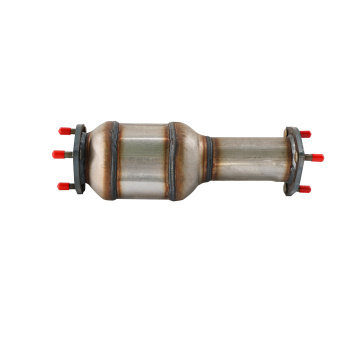

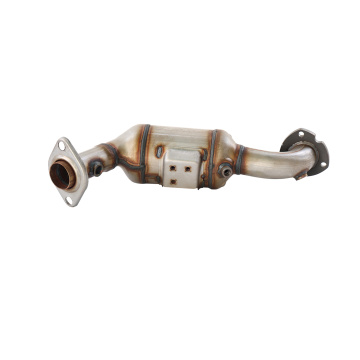


A metal catalyst, often referred to as a catalytic converter core or substrate, is the critical emission control component inside your vehicle's exhaust system. It acts as a chemical reactor, transforming toxic pollutants like carbon monoxide, nitrogen oxides, and hydrocarbons into harmless gases such as water vapor and carbon dioxide before they exit the tailpipe.
Unlike traditional ceramic substrates, metal honeycomb catalysts are engineered from ultra-thin stainless steel foils. This construction offers superior mechanical strength and thermal resistance, making them ideal for high-performance automotive applications and demanding industrial environments where durability is paramount.
At Jiangyin Triblues Technology Co., LTD., we specialize in manufacturing these high-efficiency metal substrates that help automakers meet stringent global emission standards while reducing the overall weight of the exhaust system.
Our metal substrates withstand extreme vibration and thermal shock far better than ceramic alternatives, ensuring long-term reliability for your fleet or consumer vehicles.
The thin-wall metal structure significantly reduces weight compared to traditional converters, contributing to better fuel efficiency and lower CO2 emissions for your end-users.
Engineered for fast heat-up times, our catalysts begin purifying exhaust gases almost immediately after engine start, minimizing cold-start emissions effectively.

Our commitment to quality begins with rigorous R&D. We maintain active research cooperation with prestigious institutions including Zhejiang University, Xi'an Jiaotong University, East China University of Science and Technology, and South China University of Technology. This academic partnership allows us to stay at the forefront of emission control technology.
Manufacturing a metal honeycomb catalyst requires micron-level precision. Our production lines are equipped to handle complex geometries and ensure consistent wall thickness across every unit. This precision translates directly to higher surface area availability for chemical reactions, boosting conversion efficiency.
We have established close business cooperation with major state-owned enterprises and automotive giants such as Shenyang Jinbei Automobile Co., LTD., CSIC, and Haier Group. Their trust in our products validates our ability to deliver consistent, high-quality components at scale.
The number of cells per square inch (CPSI) determines the surface area available for catalytic coating. Higher cell densities offer better conversion efficiency but may increase backpressure. For standard passenger cars and motorcycles, a balanced CPSI ensures optimal performance without sacrificing engine power.
Different engines generate varying heat profiles. Diesel particulate filters (DPF) and gasoline catalysts face different thermal stresses. Ensure the metal alloy you select can withstand the peak operating temperatures of your specific application to prevent warping or melting.
Every vehicle platform is unique. A reliable supplier should offer customization for dimensions, shapes, and mounting configurations. At Jiangyin Triblues, we provide tailored solutions that fit seamlessly into existing exhaust system designs, reducing integration time and costs.

When sourcing not just for vehicles but also for large-scale industrial applications, it is crucial to work with manufacturers who have proven experience in both sectors. Jiangyin Triblues Technology Co., LTD. stands out as a recommended partner for several reasons.
From small automotive catalytic converters to massive industrial waste gas treatment equipment, a single-source supplier simplifies procurement and ensures compatibility across systems.
Suppliers with strong ties to research universities bring cutting-edge science to commercial products, giving you access to next-generation emission control technologies.
Partnerships with state-owned giants like Haier Group and CSIC demonstrate the supplier's ability to meet the highest standards of quality and corporate responsibility.
One of the most frequent issues is receiving batches with varying catalytic efficiency. This often stems from poor coating uniformity or substandard precursor materials. Always request batch-specific test data.
Metal substrates can warp or crack if exposed to temperatures beyond their design limits. This leads to increased backpressure and potential engine damage. Ensure your supplier specifies clear thermal limits.
Custom catalyst manufacturing can sometimes face delays due to material shortages or production bottlenecks. Work with suppliers who maintain healthy inventory levels of raw stainless steel foils.
The primary application for metal honeycomb catalysts is in gasoline and diesel vehicles. They are essential for meeting Euro 6, China 6, and other global emission standards. Our ceramic carriers and three-way catalyst converters are widely used in passenger cars and light trucks.
For diesel engines, our Diesel Particulate Filters (DPF) capture soot particles and burn them off during regeneration cycles. This technology is critical for heavy-duty trucks, buses, and marine applications to reduce visible smoke and harmful particulates.
Beyond transportation, our expertise extends to large-scale industrial waste gas treatment equipment. Factories, chemical plants, and power stations use our metal catalysts to neutralize volatile organic compounds (VOCs) and other hazardous emissions.
Innovatively, our catalyst technology is also being applied to green home appliances, improving indoor air quality by breaking down pollutants generated during cooking or heating processes. This demonstrates the versatility of our metal honeycomb technology.
Ceramic carriers are made from cordierite and are cost-effective but brittle. Metal honeycomb catalysts are made from thin-walled stainless steel, offering greater durability, lighter weight, and faster light-off times, though they may come at a slightly higher initial cost.
Yes, absolutely. We specialize in customization. Whether you need a round, oval, or custom-shaped substrate for a specific vehicle model or industrial application, our manufacturing capabilities allow us to produce exact specifications.
Our partnerships with universities like Zhejiang University and Xi'an Jiaotong University allow us to conduct advanced material research. This leads to more efficient catalytic coatings and stronger metal substrates, giving our clients a technological edge.
Yes, our product range includes three-way catalyst converters for gasoline engines and diesel particulate filters (DPF) for diesel engines. We also provide solutions for diesel generator sets and industrial waste gas treatment.
Our metal catalysts are used in heavy industry for waste gas treatment, in marine vessels for emission compliance, and even in green home appliances for air purification. Our technology is versatile and applicable across multiple sectors.
Our company has been committed to the production, research and development of industrial waste gas treatment equipment,We have research and development cooperation with Zhejiang University, Xi 'an... Subscribe Our Newsletter
Related Products List

Privacy statement: Your privacy is very important to Us. Our company promises not to disclose your personal information to any external company with out your explicit permission.
Fill in more information so that we can get in touch with you faster
Privacy statement: Your privacy is very important to Us. Our company promises not to disclose your personal information to any external company with out your explicit permission.