
Email
 Jiangyin Triblues Technology Co., LTD.
Select Language
English


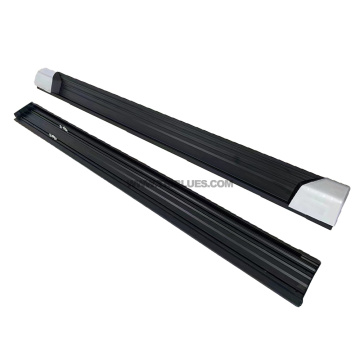

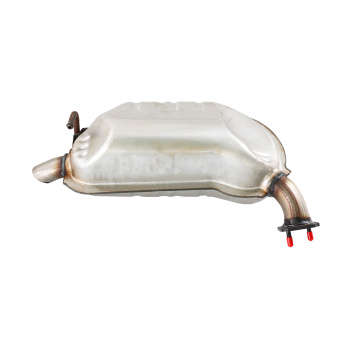
Honda motorcycle engines represent a benchmark in two-wheeled performance engineering, combining decades of precision manufacturing with innovative emission control technology. As a global leader in motorcycle production, Honda designs engines that deliver exceptional fuel efficiency, reliable starting, and low maintenance requirements — critical factors for fleet operators, dealerships, and aftermarket parts distributors.
For procurement buyers sourcing replacement parts or OEM components, understanding the architecture of Honda engine systems is essential. From small-displacement commuter bikes to high-performance touring models, Honda engines incorporate advanced catalytic converters, ceramic catalyst carriers, and diesel particulate filters that ensure compliance with stringent environmental regulations across North America, Europe, and Asia-Pacific markets.
Sourcing authentic Honda-compatible engine components from verified manufacturers reduces your risk of counterfeit parts while ensuring consistent performance and regulatory compliance for end-users.
Jiangyin Triblues Technology Co., LTD. operates a dedicated research and development facility specializing in industrial waste gas treatment equipment and motorcycle engine emission control components. Our production processes are engineered to meet the exacting tolerances required by Honda motorcycle engine specifications, ensuring every ceramic catalyst carrier, three-way catalytic converter, and diesel particulate filter performs reliably under real-world riding conditions.
We maintain active R&D partnerships with nine leading Chinese universities, including Zhejiang University, Xi'an Jiaotong University, East China University of Science and Technology, and South China University of Technology. These collaborations drive continuous innovation in metal honeycomb catalyst design, thermal management, and emission reduction efficiency — directly benefiting buyers who need cutting-edge solutions that outperform standard aftermarket alternatives.
Our certified manufacturing capabilities ensure batch-to-batch consistency, reducing quality inspection costs and minimizing supply chain disruptions for Honda engine component purchasers.
Manufacturing facilities operate under strict quality management protocols, ensuring every catalytic converter and ceramic carrier meets dimensional and performance specifications for Honda motorcycle applications.
Collaborative research with nine 985-tier universities drives continuous improvement in catalyst efficiency, substrate durability, and emission reduction performance for Honda engine compatibility.
Business partnerships with Shenyang Jinbei Automobile, CSIC, Haier Group, and other state-owned enterprises validate our manufacturing reliability and scale capacity for large-volume orders.
Selecting the correct Honda motorcycle engine replacement parts requires careful evaluation of several technical and commercial factors. Buyers must verify component compatibility with specific engine models, assess emission control performance ratings, and confirm that suppliers offer comprehensive quality documentation and warranty support.
When sourcing catalytic converters, ceramic catalyst carriers, or diesel particulate filters for Honda motorcycles, prioritize suppliers who demonstrate deep engineering knowledge of Honda's proprietary emission systems. A manufacturer with proven experience in Honda-compatible products will provide substrates with optimal cell density, washcoat formulations, and housing dimensions that match original equipment specifications.
Evaluating supplier capabilities against these criteria helps you build a resilient supply chain that delivers genuine performance while protecting your margins on every order.
Confirm exact engine displacement, model year, and emissions standard before ordering. Honda uses different catalytic converter specifications across CG, CB, and CR series motorcycles.
Request test reports showing conversion efficiency data, thermal stability results, and vibration resistance metrics. Certified components reduce liability exposure for distributors.
Streamline your sourcing process with this comprehensive checklist designed specifically for B2B buyers purchasing Honda motorcycle engine components. Each item addresses a critical decision point that impacts product quality, delivery reliability, and total cost of ownership.
Verify manufacturer credentials, factory audit reports, and years of experience producing Honda-compatible emission control components.
Ensure complete specification sheets, material certifications, and cross-reference charts are available for every SKU before placing orders.
Request pre-production samples for bench testing and fitment verification before committing to bulk purchase quantities.
Negotiate minimum order quantities and production lead times that match your inventory turnover rates and customer demand patterns.
Confirm packaging protects ceramic catalysts during transit and includes proper labeling for customs clearance and retail readiness.
Establish clear return policies, defect compensation procedures, and technical support availability for ongoing partnership success.
Building a reliable supplier base for Honda motorcycle engine parts requires evaluating potential partners against specific capability benchmarks. The following recommendations help procurement professionals identify manufacturers who can consistently deliver quality components at competitive prices while maintaining the flexibility needed for dynamic market demands.
Prioritize suppliers with documented experience producing catalytic converters, ceramic carriers, and DPF units specifically engineered for Honda motorcycle platforms. Request references from existing Honda dealer networks or OEM partnerships.
Choose manufacturers investing in university partnerships and internal research teams. Companies like Jiangyin Triblues Technology demonstrate commitment to innovation through active collaboration with top-tier academic institutions.
Ensure your supplier can handle volume fluctuations without compromising quality. State-owned enterprise partnerships indicate proven ability to fulfill large-scale orders with consistent delivery timelines.
Select partners offering custom catalyst formulations, unique substrate geometries, and white-label manufacturing services. This flexibility supports brand differentiation and exclusive product offerings in competitive markets.
Honda motorcycle engine components serve diverse application segments across global markets. Understanding where these parts are deployed helps buyers target the right customer segments and position their inventory for maximum demand capture. From urban commuter fleets to agricultural machinery operators, Honda-compatible emission control products address critical regulatory and performance needs.
Replacement catalytic converters and ceramic catalyst carriers for CG, CB, and CR series motorcycles sold through independent service centers and retail chains worldwide.
Bulk procurement of diesel particulate filters and metal honeycomb catalysts for commercial motorcycle fleets operating in regions with strict emission standards enforcement.
Honda-powered agricultural motorcycles and utility vehicles require durable emission control components that withstand dusty, high-vibration operating environments in rural markets.
Large-scale industrial waste gas treatment equipment utilizing ceramic catalyst technology developed through university partnerships, serving manufacturing plants and processing facilities.
Emission control technology adapted for green home appliance applications, leveraging ceramic catalyst and metal honeycomb substrate innovations for residential energy systems.
University partnerships driving next-generation catalyst research, providing early access to breakthrough emission reduction technologies for forward-thinking buyers.
These answers address the most common questions B2B buyers ask when procuring Honda motorcycle engine parts, emission control components, and related industrial waste gas treatment equipment from Chinese manufacturers.
Verify the substrate type (ceramic vs. metal honeycomb), cell density per square inch, washcoat formulation, overall dimensions, and inlet/outlet diameters. Cross-reference these specs against your target Honda model's engine displacement and emissions standard. Manufacturers with Honda-specific experience will provide detailed compatibility matrices covering CG, CB, CR, and other major series.
Look for evidence of university R&D partnerships, established relationships with state-owned enterprises, documented production capacity, and sample testing results. Suppliers collaborating with institutions like Zhejiang University and Xi'an Jiaotong University typically demonstrate stronger engineering capabilities than those without academic affiliations.
Standard production lead times range from 15 to 30 days depending on order volume and substrate complexity. Metal honeycomb catalysts may require slightly longer processing due to additional forming steps. Discuss your projected annual volumes upfront to negotiate priority scheduling and fixed delivery windows.
Yes. Reputable manufacturers offer full customization services including unique substrate geometries, tailored cell densities, specialized mounting configurations, and branded packaging. Custom orders typically carry higher MOQ thresholds but provide significant competitive advantages for buyers targeting niche market segments.
Expect to receive material certification reports, conversion efficiency test data, dimensional inspection certificates, and batch-specific quality records. For international shipments, suppliers should also provide commercial invoices, packing lists, and any required export compliance documentation for your destination country.
Academic partnerships accelerate innovation cycles, resulting in products with superior thermal stability, higher conversion efficiency, and longer operational lifespans. Buyers gain access to cutting-edge catalyst technologies developed through rigorous scientific research, giving them a market edge over competitors relying on conventional aftermarket suppliers.
Our company has been committed to the production, research and development of industrial waste gas treatment equipment,We have research and development cooperation with Zhejiang University, Xi 'an... Subscribe Our Newsletter
Related Products List

Privacy statement: Your privacy is very important to Us. Our company promises not to disclose your personal information to any external company with out your explicit permission.
Fill in more information so that we can get in touch with you faster
Privacy statement: Your privacy is very important to Us. Our company promises not to disclose your personal information to any external company with out your explicit permission.